
 日本語
 Русский
 España
 عرب .

Nonwoven Fabric for Roof Insulation: Material Selection and Performance Guide
2026-11-11
This guide covers the selection logic for nonwoven-based roof membranes: what each family does, which test methods produce the numbers on the datasheet, and how to match the membrane to a warm or cold roof build-up before the specification is issued.
What the Nonwoven Layer Actually Does in a Roof Assembly
A nonwoven roof membrane carries three duties at once: mechanical reinforcement, liquid water control, and a stable base for the coating or laminated film that performs the barrier function. Remove the nonwoven and the film has no tensile strength, no nail-hold and no resistance to the thermal cycling a roof surface sees.
The carrier is normally a spunbond polypropylene, a spunbond polyester, or a wet-laid glass fleece. Each choice shifts the balance between elongation, heat resistance and cost. Polypropylene gives a soft, low-cost carrier with moderate heat resistance. Polyester holds its strength at higher surface temperatures, which matters under dark metal coverings that heat up in summer sun. Glass fleece brings dimensional stability and fire performance at a weight and cost penalty.
Definition. The harmonised European product standard for these sheets is EN 13859-1, Flexible sheets for waterproofing - Definitions and characteristics of underlays - Part 1: Underlays for discontinuous roofing. A roof underlay complying with it is CE marked under Regulation (EU) No 305/2011 and supplied with a Declaration of Performance stating its watertightness class, tensile strength, vapour resistance and reaction-to-fire class.
Grammage is the first lever a designer can pull. A heavier carrier raises tensile strength and nail-tear resistance, but it also raises roll weight and stiffness, and stiff rolls are harder to press into an eaves corner on a cold morning. That trade-off, not the headline strength figure, is what site teams feel.
- Tensile and tear strength along and across the roll, measured by the methods referenced in EN 13859-1.
- Nail-shank resistance, which controls whether a fastener tears through under wind suction.
- A uniform surface for coating, laminating or foiling, so the barrier layer has no thin spots.
- Handling behaviour on site: friction on the scaffold, drape at the ridge, scuff resistance during installation.
Three Underlay Families and Where the Nonwoven Sits
Roof underlays divide into three functional families, and each uses its nonwoven differently: vapour-permeable membranes rely on the carrier for strength and on a microporous or monolithic film for diffusion; vapour barriers combine a carrier with a polyethylene coating that stops vapour; reflective barriers add aluminium foil to a nonwoven or woven carrier to cut radiant heat transfer.
| Family | Core construction | Vapour behaviour | Typical roof use |
| Waterproof breathable membrane | PP or PET spunbond carrier with microporous film | Diffusion-open, low Sd | Cold ventilated roofs, walls, refurbishment over existing decks |
| Vapour barrier and non-permeable underlay | Nonwoven or woven PE carrier with PE coating | Diffusion-closed, high Sd | Warm roofs, metal roofing, cold-side vapour control |
| Reflective vapour barrier | Nonwoven or woven carrier laminated to aluminium foil | Diffusion-closed with low surface emissivity | Roofs under metal sheet where radiant heat gain matters |
The breathable family is the one most often named directly in a performance brief, because a diffusion-open membrane lets a timber deck dry outward. Jiangsu Aotelong New Materials Co., Ltd. lists its breathable range in five grades, T80 through T260, plus a general purpose ATL membrane, which is the usual way manufacturers let a specifier scale water resistance and mass without changing the membrane type.
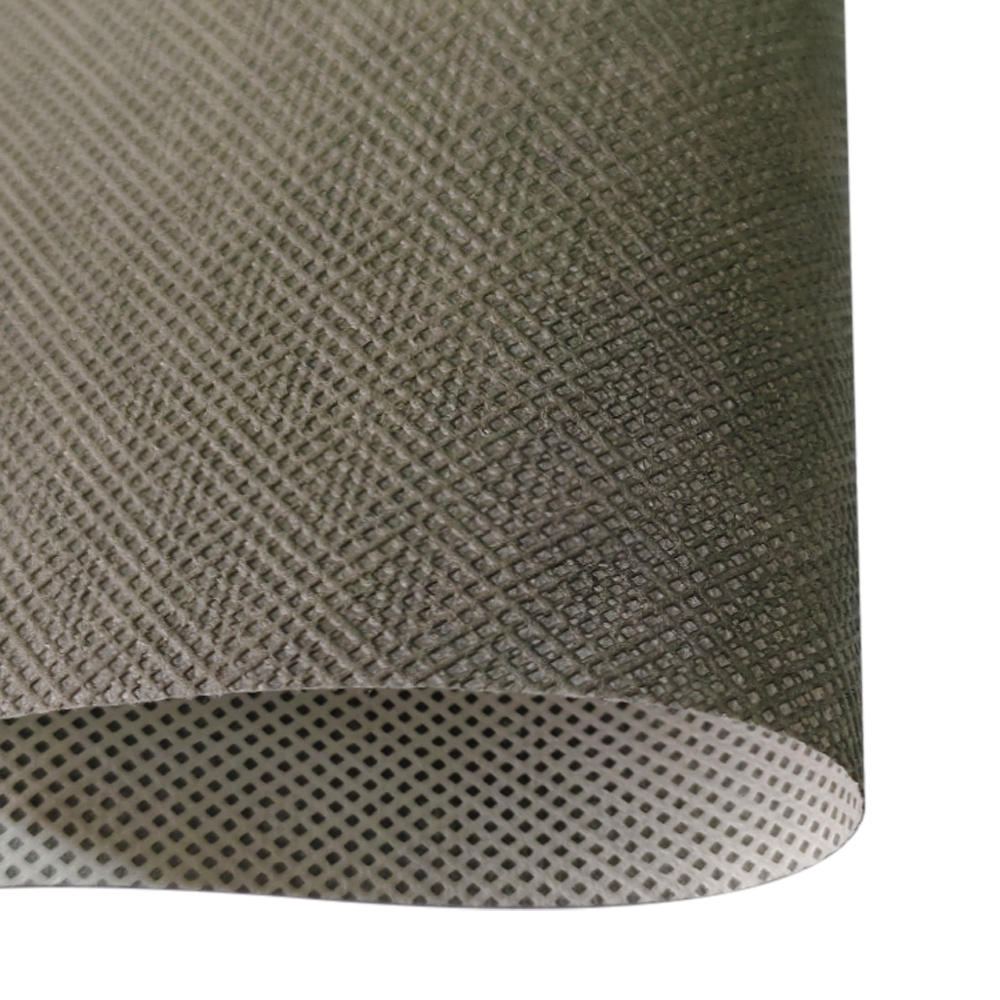 Waterproof Breathable Membrane T120 for Roof and WallA three-layer breathable, waterproof underlay in the T80–T260 range, suited to timber decks and roof or wall assemblies needing diffusion-open performance.View Product →
The underlay never works alone. It sits inside a stack of tanking, damp-proofing and roofing layers, and mixing up their duties is a reliable source of defects. A separate overview of waterproofing systems used in construction is worth reading before the first specification meeting.
Five Selection Checks Before a Membrane Enters the Specification
Five checks decide the specification: vapour control duty, watertightness class, mechanical strength, reaction to fire, and ageing under ultraviolet light and heat. Run them in that order, because the first two usually eliminate most of the catalogue before cost is discussed.
- Fix the vapour control duty first. Vapour resistance is expressed as the Sd value in metres, the product of the vapour diffusion resistance factor (mu) and the layer thickness, measured to EN ISO 12572 or, for US projects, ASTM E96. A brief that names Sd removes the ambiguity between breathable and vapour tight that marketing language creates.
- Confirm the watertightness class. EN 1928 defines the water column test, and manufacturers report the class achieved, W1, W2 or W3, together with the method used. Compare like with like, because a class result only means something alongside its method and duration.
- Check the mechanical values, not just the headline. Tensile strength to EN 12311-1 and nail-tear resistance to EN 12310-1 are the two figures that predict site damage. Wind actions calculated to EN 1991-1-4 set the fastener density, and the membrane has to survive that density without tearing at the head of the fixing.
- Agree the reaction-to-fire class. Reaction to fire is classified under EN 13501-1, and Class E is the level most European roof underlay specifications call for; a project with a thatched or otherwise high-risk covering will demand more. Ask for the classification document rather than a marketing line.
- Set the exposure and ageing limits. Ultraviolet resistance and heat ageing determine how long a membrane can stay uncovered during construction. A membrane rated for four weeks of exposure changes the site programme; one rated for three months does not.
Performance Requirements You Should See on the Datasheet
A compliant underlay datasheet states five values with their test methods: watertightness class, Sd value, tensile strength, nail-tear resistance and reaction-to-fire class. Anything listed without a method is a claim, not a specification.
| Parameter | Test method | What to compare |
| Watertightness | EN 1928 | Class W1 to W3 with the method and water column stated |
| Vapour resistance | EN ISO 12572 | Sd in metres at the stated temperature and humidity |
| Tensile strength | EN 12311-1 | Machine and cross direction values, not an average |
| Nail-tear resistance | EN 12310-1 | Force in newtons, with the substrate named |
| Reaction to fire | EN 13501-1 | Class plus smoke subclass where the project requires it |
Three of those standards do most of the work in a technical review. If a supplier can quote all three with values, the product is documented well enough to compare against a competitor on equal terms.
Vapour-Open or Vapour-Closed: Matching the Membrane to the Build-Up
The membrane follows the build-up, not the other way round. A cold ventilated roof takes a vapour-open underlay above the insulation; a warm roof with insulation at the rafter line needs a vapour-closed layer on the warm side and relies on the underlay mainly for water control.
- Vapour-open underlay with a low Sd value
- Ventilation path at eaves and ridge
- Insulation at ceiling level
- Drying direction outward through the underlay
- Vapour-closed control layer on the warm side
- Underlay above the insulation for water shedding
- Continuous insulation with no cold bridge
- Drying direction inward, controlled by design
Two vapour-closed layers on both faces of the same insulation leave moisture nowhere to go. One side has to remain able to dry, and the specification should state which side that is before the membrane is ordered.
Reflective membranes add a third variable. An aluminium foil works by lowering surface emissivity, and it delivers that benefit only when it faces an air space. Foil pressed directly against insulation behaves as a vapour barrier and nothing more, which is a common and expensive misunderstanding on metal roofing.
 AN100 Reflective Aluminum Film Composite MembraneA lightweight foil-faced composite for insulation facing and protected roof or wall assemblies, where a reflective layer must face an air space to perform.View Product →
Procurement and Site Checks That Prevent Callbacks
Four documents and two site checks cover most underlay risk: the Declaration of Performance, the third-party certificate, the batch record, the lap-tape compatibility statement, plus a roll inspection on delivery and a pull test on the first lap.
- Declaration of Performance matched to the product code on the roll label, not to the family name in the brochure.
- Third-party certification: a BBA certificate or an ICC-ES evaluation report assessed under acceptance criteria AC38 gives a buyer an independent route to test water-resistive barrier claims.
- Batch and roll records: width, length, batch number and production date, so a defect can be traced back to a run.
- Lap-tape compatibility: tape and membrane face must come from the same system. A foil-faced membrane needs a different tape from a plain PP nonwoven face.
- Delivery inspection: check wrapping, edge damage and storage position. A roll stored on its side deforms and will not lay flat.
- First-lap pull test: peel a taped lap after ten minutes and confirm the bond fails cohesively rather than at the interface.
Jiangsu Aotelong New Materials Co., Ltd., which also appears under the name Zhongning New Materials Jiangsu Co., Ltd., manufactures nonwoven-based building membranes in Yangzhou, Jiangsu. The company states that its PP spunbond and breathable membrane products have been tested by the National Building Materials Testing Center and hold CE marking and BBA certification, and that its plants have undergone ICC-ES and BBA factory inspections. Buyers should request the certificate numbers and confirm the scope covers the exact product code being purchased.
 ALTARON Non-Vapor Permeable Roofing UnderlayA polymer vapor barrier for roofs and walls under insulation, useful when a project needs a non-breathable layer alongside breathable membranes in one supplier range.View Product →
The wider building construction membrane range covers vapour barriers, breathable membranes, reflective laminates and window tapes, which is useful when a single roof package has to be sourced from one supplier and one certificate set.
Practical Questions From Project Teams
What Sd value should a roof underlay have?
There is no single number, because Sd describes a layer's role in a build-up rather than a quality grade. As a working convention, specifications treat a membrane with an Sd below 0.5 m as diffusion-open and a layer above 10 m as a vapour barrier; between those values the layer is vapour-retarding and the build-up needs a drying path designed for it.
Can a breathable underlay replace a vapour control layer?
No. A breathable underlay manages liquid water and lets vapour escape; it does not stop vapour entering the construction from the warm side. In a warm roof the vapour control layer sits on the warm side of the insulation and the underlay sits above it, and the two are verified against different test values.
How is watertightness verified on a nonwoven underlay?
By the EN 1928 water column test, reported as a class W1 to W3 with the method used. Pair that figure with a site check on laps: a correctly rated membrane with a poorly taped lap still leaks, and lap integrity is the failure mode that shows up first after a storm.
When is a reflective underlay worth specifying?
When the roof needs a vapour-closed layer and radiant heat gain matters, typically under metal sheet in a warm roof. The benefit depends on a facing air space: foil in direct contact with insulation acts as a vapour barrier only, and the reflective performance claimed in the brochure does not appear on site.


© 2024 Jiangsu Aotelong New Materials Co., Ltd.

-
+86-0514-87539226 (Tel)
+86-514-87539218 (Fax)
Tiancheng Road, Shatou Industrial Park, Guangling District, Yangzhou City, Jiangsu.