
 日本語
日本語 Русский
 España
 عرب .
عرب .
How to Compare Different Waterproof Breathable Membrane Types: Key Tests and Specs
2026-09-14
A procurement engineer comparing three waterproof breathable membrane samples will almost always see similar datasheets. Hydrostatic head values cluster around 2000 mm, MVTR figures sit between 400 and 900 g/m2/24h, and every brochure claims the same applications. The differences only appear when you test the samples the way the building will use them: folded, wetted, loaded by wind, and fastened into a specific wall assembly. This guide gives you a repeatable comparison method built on measurable performance and construction behavior, not on brochure claims.
A waterproof breathable membrane is a sheet material that resists liquid water penetration while allowing water vapor to diffuse through. In the building envelope it protects insulation and structure from rain and air moisture while reducing the risk of interstitial condensation.
Start with the Four Jobs Every Membrane Must Perform
You cannot compare membrane types until you define the four measurable jobs the membrane must do in your specific assembly.
- Liquid water resistance - measured as hydrostatic head in millimeters of water; a wall membrane should normally show at least 1000 mm, while roof underlays are often specified at 2000 mm or more.
- Water vapor transmission - measured as MVTR in g/m2/24h; the figure only means something when the test method is stated alongside it.
- Mechanical durability - tear strength, tensile strength, and fastener pull-through determine how the sheet survives installation and wind load.
- Dimensional and thermal stability - shrinkage under heat and flexibility at low temperature decide whether the membrane stays flat and sealed over its service life.
A membrane with 2000 mm hydrostatic head and 800 g/m2/24h MVTR is not automatically better than one with 1000 mm and 1200 g/m2/24h. The correct ratio depends on the wall. A drained rainscreen can use a high-permeability membrane; a compact rendered wall may need a lower-permeability construction to keep the hygrothermal balance in the correct direction.
| Property | Waterproof breathable membrane | Vapor barrier | Reflective vapor barrier |
| Primary function | Rain screen plus drying | Moisture diffusion control | Moisture control plus radiant heat reflection |
| Typical MVTR | 200 to 1200 g/m2/24h | Below 15 g/m2/24h | Below 15 g/m2/24h |
| Typical hydrostatic head | 1000 to 3000 mm | Varies with reinforcement | Varies with lamination |
| Position in assembly | Cold side of insulation | Warm side of insulation | Warm side or roof deck face |
| Common carrier | PP spunbond nonwoven | PE woven or nonwoven | Aluminum film on woven or nonwoven |
Compare Construction: Film, Lamination, and Carrier
The construction of the membrane, not the brand, determines how it behaves after installation, so the first comparison should be structural rather than numeric.
Two film technologies dominate the category. Microporous films use polyolefin sheets full of microscopic pores that block liquid water and allow vapor diffusion; they breathe well initially, but dust, oil, or surface-active contaminants can block the pores over time. Monolithic films are solid polyurethane or copolyester sheets that transport vapor by molecular diffusion across the whole surface; they keep more breathability when wet, but usually cost more and feel stiffer. In both cases the film is laminated to a carrier, typically a PP spunbond nonwoven, a woven scrim, or a mesh-reinforced sheet, and the quality of that lamination decides real-world durability.
- Layer count - a three-layer construction with film plus two nonwoven faces handles site handling better than a two-layer one.
- Peel behavior - film that separates from the carrier under moderate hand force will delaminate around fasteners.
- Reinforcement - a scrim or mesh between the layers controls tear propagation.
- Roll geometry - width and length affect lapping, waste, and installed cost.
Within the building construction nonwoven product range, waterproof breathable membranes share carriers with vapor barriers and reflective products, which makes side-by-side comparison simpler than comparing suppliers with completely different polymer families.
 Waterproof Breathable Membrane and Composite Nonwoven Products from Certified ManufacturerThis manufacturer offers laminated nonwoven membranes and protective fabrics with CE and BBA certifications, ideal for evaluating folding durability and hydrostatic head retention in building construction applications.View Product →
Fold a 200 mm square sample ten times, then re-test its hydrostatic head. A loss of more than 30 percent points to a fragile film or a weak carrier bond; a robust membrane stays within 10 to 15 percent of the flat value.
Read the Three Numbers That Decide the Specification
Hydrostatic head, MVTR, and mass per unit area are the three numbers you should compare before any on-site evaluation.
Hydrostatic head expresses liquid water resistance in millimeters of water column, also quoted in kPa where 10 kPa equals roughly 1000 mm. For a vertical wall in a sheltered zone, values near 1000 mm can be acceptable; for a roof underlay or a high-exposure facade, specify 2000 mm or more. MVTR expresses vapor flow in grams of water per square meter per 24 hours, and the test method controls the result: upright cup desiccant tests give lower figures, while inverted cup tests give higher figures because water contacts the membrane directly. Always compare values measured by the same standard, such as ASTM E96, EN ISO 12572, or JIS L1099.
Typical MVTR ranges by membrane category (g/m2/24h, inverted cup method)
| Model | Relative carrier mass | Typical selection logic |
| T80 | Lightest | Low-exposure walls, temporary protection, cost-driven projects |
| T120 | Light | Standard walls in sheltered or inland zones |
| T150 | Medium | All-round wall and pitched roof underlay |
| T180 | Heavy | High-exposure facades and rough handling on site |
| T260 | Heaviest | Roof underlays, long temporary exposure, harsh sites |
ALTARON Barrier Series for Comparing MVTR Classes in Wall AssembliesThe ALTARON Barrier combines air and water resistance with vapor permeability, making it a key reference for contrasting MVTR classes between vented and compact wall assemblies.View Product →Match the Membrane to the Wall Assembly Type
The assembly dictates the membrane, not the other way round: decide whether the wall is vented or compact before you shortlist MVTR classes.
Vented rainscreen or drained cavity
Cladding sits on a ventilated cavity, so the membrane acts as a secondary defense. A high-permeability WBM with MVTR above 600 g/m2/24h works well because the cavity can vent any inward vapor drive.
Compact, rendered, or sealed walls
There is no cavity to vent moisture. A lower-permeability membrane plus a project-specific hygrothermal calculation prevents vapor from being trapped between the sheathing and the render; airtightness details now matter more than the MVTR headline.
Roof work is stricter. Wind-driven rain, snow, solar heating, and weeks of temporary exposure during installation demand higher tear resistance and temperature tolerance. Roofing underlay specifications commonly expect nail tear resistance in the 150 to 250 N range and a service temperature window from minus 40 to plus 80 degrees Celsius; this is where a heavier series such as T260 earns its place.
Heavy-Duty Synthetic Roofing Underlayment and Insulation-Compatible MembranesWith roofing underlay weights from 70 to 260 gsm and layered PP structures, these products suit high tear resistance and temperature tolerance needs for roof work and closed-cell insulation.View Product →Rigid closed-cell insulation tolerates lower MVTR; fibrous moisture-open insulation requires a high-permeability membrane to keep the insulation-to-membrane interface dry. Write the insulation type into the comparison brief before asking suppliers for quotes.
Verify Supplier Consistency and Certification
The sample that wins the comparison means nothing if the delivered batch does not match it, so verify the factory, the certificate, and the lot.
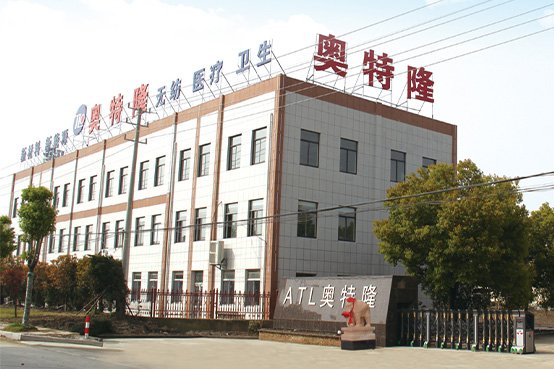
When the shortlist narrows to two or three candidates, add a supplier audit step. Jiangsu Aotelong New Materials Co., Ltd., for example, publishes that its PP spunbond nonwoven and waterproof breathable membranes have passed national building materials testing and hold CE and BBA certification, with ICC-ES and BBA factory checks listed on the company About page. Third-party certification does not replace incoming inspection, but it shortens the gap between sample and delivery.
- Ask for test reports issued by independent laboratories, not in-house data sheets.
- Request a retained sample from the same production lot as the delivery.
- Run the crease-and-hydrostatic-head test on every arriving roll group.
- Confirm traceability: roll number, date of manufacture, and lot code on each roll.
For a broader view of how these products sit together in a build, read our overview of different types of waterproofing in construction.
The failure is not a wrong membrane type but a substandard delivered batch. Put the acceptance criteria in the purchase order: minimum hydrostatic head, minimum MVTR by a stated standard, tear resistance, and the fold test. Then verify every delivery against those numbers.
Frequently Asked Questions
What is the difference between a waterproof breathable membrane and a vapor barrier?
A waterproof breathable membrane is installed on the cold side of the insulation to block wind-driven rain while letting vapor escape. A vapor barrier sits on the warm side to stop vapor entering the assembly. Their MVTR ranges barely overlap: a vapor barrier normally stays below 15 g/m2/24h, while a WBM typically runs from 200 to 1200 g/m2/24h.
What MVTR should a wall membrane have?
For a vented rainscreen, a high-permeability membrane above roughly 600 g/m2/24h by the inverted-cup method is a safe benchmark. For a compact or rendered wall, use a hygrothermal calculation instead of a fixed figure, because the assembly itself determines the vapor balance.
How do the Aotelong T80 to T260 membranes differ?
The numeric suffix tracks the nominal carrier mass. T80 suits light and low-exposure duties; T120 and T150 cover standard wall and roof underlay work; T180 and T260 add carrier weight and tear resistance for high-exposure facades, roof underlays, and rough construction sites.
Can the same membrane be used on a wall and a roof?
Many high-permeability membranes work in both positions, but roofs impose higher tear, temperature, and temporary-exposure demands. Check the nail tear value and the manufacturer's declared service temperature before reusing a wall specification on a roof.


© 2024 Jiangsu Aotelong New Materials Co., Ltd.

-
+86-0514-87539226 (Tel)
+86-514-87539218 (Fax)
Tiancheng Road, Shatou Industrial Park, Guangling District, Yangzhou City, Jiangsu.