
 日本語
日本語 Русский
 España
 عرب .
عرب .
How Waterproof Breathable Membrane: Practical Applications, Selection, Performance, and
2026-10-08
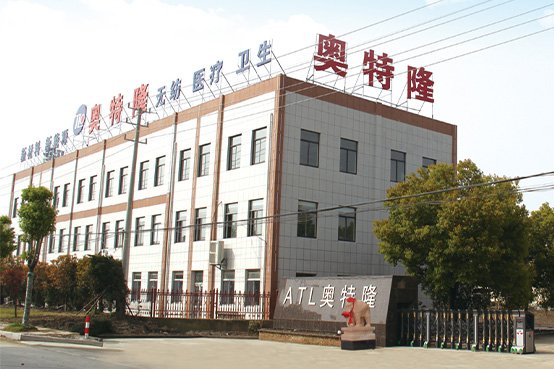
A building envelope fails predictably when moisture gets trapped. During the heating season, warm interior air pushes water vapor toward the cold outer sheathing, where it condenses, saturates insulation and corrodes fasteners. A waterproof breathable membrane (WBM) exists to break that sequence: it repels liquid water driven by wind and rain while letting vapor diffuse outward. Quality in this product category is therefore a consistency problem, and manufacturers such as Jiangsu Aotelong New Materials Co., Ltd. (also operating as Zhongning New Materials Jiangsu Co., Ltd. from its Yangzhou facility in the Yangtze River Delta) earn trust by controlling every step between polymer pellet and finished roll.
Waterproof breathable membrane (WBM): a building sheet that stops liquid water penetration while allowing water vapor to pass through, preventing condensation inside walls and roofs without trapping moisture.
Raw Material Choice Sets the Performance Ceiling
Membrane performance is capped by the polymer grade that enters the extruder, so verified manufacturers audit incoming resin before production begins.
A WBM starts with polypropylene (PP) spunbond as the mechanical carrier, a microporous or monolithic functional layer, and an additive system of UV stabilizers, processing aids and pigments. The melt flow index of the PP resin, residual moisture in the pellets and the dispersion of the masterbatch all influence pore structure and film uniformity. A shift of 1 g/10 min in melt flow index can move a 120 g/m² membrane's vapor transmission by roughly 8 percent, which is why lot-level verification matters.
- Melt flow index verified against the approved resin specification
- Moisture and ash content measured for every delivered lot
- Masterbatch dispersion checked under magnification before line loading
- Lot-level color and additive dosage recorded for traceability
A variation of one index point in resin melt flow can shift finished permeability outside specification; suppliers that skip incoming testing discover this only after field failures.
Extrusion and Lamination Are Controlled at Line Level
Process control decides whether the finished membrane matches the designed balance of water resistance, vapor diffusion and mechanical strength.
Aotelong's building envelope range, which includes the waterproof ATL breathable membrane and the T80, T120, T150, T180 and T260 grades, is produced against fixed target windows for grammage, thickness and lamination bond strength. In-line basis-weight gauges measure the web continuously, and pinhole detectors scan for coating voids before the roll reaches the winder. Lamination temperature and nip pressure determine how firmly the functional layer bonds to the spunbond substrate, and both are logged against the approved process window for each grade.
 Aotelong ATL Breathable Membrane with In-Line Quality ControlManufactured with continuous basis-weight and pinhole monitoring, this membrane batch must pass water column, vapor, strength, and aging tests before release — key for reliable building envelopes.View Product →
Every Batch Is Released Through Four Test Gates
A credible manufacturer releases a membrane batch only after the roll has passed water column, vapor permeability, mechanical strength and aging tests.
| Property | Typical method | Defect detected |
| Water column | EN ISO 811 hydrostatic head | Pinholes, coating voids |
| Moisture vapor transmission rate | EN ISO 12572 desiccant method | Blocked micropores, over-lamination |
| Tensile and nail tear strength | EN 12311-2 and EN 12310-1 | Weak substrate, poor bond |
| Accelerated aging | EN 1297 UV and thermal cycling | UV stabilizer deficiency, film cracking |
Representative lot-release water column results across the T-series
A membrane that passes the water column gate but fails the vapor transmission gate is only a vapor barrier; release decisions must treat the two results as one pair.
Aotelong T-Series Membranes with CE and BBA CertificationThese membrane grades hold European CE and British BBA certifications, providing independent verification of vapor and water resistance. Review them to confirm quality beyond manufacturer claims.View Product →Third-Party Audits Turn Internal Tests into Credibility
Independent certification is the only quality signal that does not rest on the manufacturer's own word.
Aotelong reports passing ICC-ES factory inspections for the North American market, BBA factory inspections for the United Kingdom, CE marking for its polypropylene nonwoven and membrane products, and testing at China's National Building Materials Testing Center. Factory audits are stronger evidence than one-off product certificates because they recur: the auditor verifies the process, not a sample.
- Calibration records for production and test equipment
- In-line measurement and pinhole detection logs
- Retained samples from every released batch
- Corrective action reports for each failed test
A recurring factory audit forces process discipline between shipments; a one-time lab report only proves what a single sample did last year.
Because wall and roof assemblies demand different vapor strategies, comparing the different types of waterproofing in construction before selecting a grade is a necessary step.
Altaron Synthetic Roofing Underlayment in Multiple WeightsThis roofing underlayment comes in 70–260 gsm weights with a three-layer PP structure, allowing selection by wall or roof vapor needs. Traceable production distinguishes consistent lines from lucky samples.View Product →Traceability Connects Every Roll to Test Evidence
Traceability separates a lucky sample that passed from a production line that passes consistently.
Each production roll carries a batch identifier that links back to raw material lots, extrusion parameters and finishing results, and retained samples from every lot are stored for re-testing. On site, when an inspector asks how a roll can be proven compliant, the answer must be a document rather than a memory. Aotelong's shipping documentation follows this pattern for its membrane, vapor barrier and reflective insulation lines.
- Batch ID printed on every roll core and outer label
- Extrusion and lamination setpoints logged against the approved window
- Retained samples stored for re-testing after dispatch
- Handling and storage instructions printed on packaging
In a fully traced facility, a failed warehouse inspection can be traced to the exact production shift and raw-material lot within one hour.
Frequently Asked Questions
The three questions buyers ask most concern vapor strategy, release testing and certification; the answers below cover these areas in practical terms.
What is the difference between a waterproof breathable membrane and a vapor barrier?
A waterproof breathable membrane resists liquid water while permitting water vapor to diffuse through it. A vapor barrier blocks vapor movement almost completely. They are installed on opposite sides of a building assembly, and mixing them up traps moisture inside the wall.
How do manufacturers test waterproofness during production?
Producers run hydrostatic head tests per EN ISO 811 on samples from every production lot and combine them with continuous in-line pinhole scanning. A lot is rejected if the measured water column falls below the grade-specific threshold, such as 1,800 mm for the T150 grade.
What certifications should a buyer request from a membrane manufacturer?
Buyers should request CE marking, BBA or ICC-ES certification and ISO 9001 quality management evidence. Factory inspection reports matter more than product test certificates alone, because audits recur and verify the process on a fixed schedule.
How should delivered membrane rolls be stored?
Rolls must stay upright, protected from direct sunlight and stored below the temperature limit on the label. Improper storage causes UV degradation and film embrittlement that no release test can predict for that specific roll.


© 2024 Jiangsu Aotelong New Materials Co., Ltd.

-
+86-0514-87539226 (Tel)
+86-514-87539218 (Fax)
Tiancheng Road, Shatou Industrial Park, Guangling District, Yangzhou City, Jiangsu.