
 日本語
 Русский
 España
 عرب .

How Waterproof Breathable Membranes Improve Building Energy Efficiency
2026-10-26
Consider a steel-framed building on a humid coastline. After the first winter, the insulation in the exterior wall performs worse than the design documents predicted, heating bills climb, and a musty smell appears near the base of the wall. The cause is rarely a single dramatic leak. Moisture has accumulated inside the cavity, and wet insulation is poor insulation.
A waterproof breathable membrane (WBM) is the layer that prevents this sequence in both lightweight and heavy building systems. It improves building energy efficiency through three connected mechanisms: keeping insulation dry, limiting air leakage, and preventing condensation in the wall or roof assembly. This article explains how the membrane achieves these results, how it fits into a complete envelope system, and what to verify when specifying a product.
What a Waterproof Breathable Membrane Is and How It Works
A waterproof breathable membrane is a sheet material with a microporous structure. The pores are small enough to resist liquid water under wind pressure, yet large enough to let water vapor molecules diffuse through. In practical terms, the membrane keeps wind-driven rain and meltwater outside while allowing the building structure to release moisture vapor toward the exterior.
Two measured values define how a membrane will perform in a specific building. Water column resistance, usually determined according to EN 1928 or ISO 811, expresses how much water pressure the material can withstand before leaking. Higher values are required when the wall or roof is exposed to strong wind-driven rain. Water vapor permeability is commonly expressed as the Sd value, the equivalent air layer thickness in meters. A low Sd value means the membrane is vapor-open and allows rapid drying; a high Sd value means the membrane is vapor-tight.
The correct balance depends on the climate and the wall construction, which is why manufacturers offer membranes in low-permeability and high-permeability versions. Aotelong supplies both types in its building range, and the ATL waterproof breathable membrane series is designed for curtain wall, steel-frame, and timber-frame projects where the exterior layer must stop liquid water without blocking the drying path.
 Composite SMS/SMMS Nonwoven Fabrics Manufacturers, FactoryJiangsu Aotelong New Materials Co., Ltd. is China composite nonwoven fabrics manufacturers and laminated non woven fabric factory, offer ...View Product →
Three Ways a Waterproof Breathable Membrane Lowers Energy Use
The energy value of a membrane lies in what it protects as much as in the material itself. Three mechanisms matter.
It Keeps Insulation Dry and Preserves Its R-Value
Thermal resistance figures, such as R-values, are based on dry material. Damp insulation loses a large part of its thermal performance: moisture can reduce the effective R-value of fibrous insulation by 20 to 50 percent. To put that in real terms, an insulation layer that loses a third of its R-value performs as if a third of its thickness had been removed. When a membrane stops water from entering the cavity, the insulation keeps its tested value, and the heating and cooling plant does not need to compensate for a degraded thermal layer.
It Reduces Air Leakage and Wind Washing
Uncontrolled air movement is one of the largest sources of energy loss in a building. Depending on the structure type, air infiltration can account for up to a third of the heating and cooling load. Air that moves through porous insulation also extracts heat directly from the fibers, a process known as wind washing. Installed as a continuous outer layer, a waterproof breathable membrane acts as a wind barrier and reduces convective heat loss through the envelope.
It Prevents Condensation and the Damage It Causes
When warm, humid indoor air reaches a cold surface inside the wall assembly, condensation forms. If the outer layer of the wall is tight to both water and vapor, moisture has no exit path and accumulates in the insulation and in structural members. The wetting adds latent heat loading to the envelope, promotes mold and decay, and shortens the service life of the structure. A vapor-open membrane on the exterior creates a safe drying path: water vapor can diffuse outward during warmer periods while external water is still kept out.
These three effects are connected. Dry insulation holds its R-value, a continuous membrane reduces infiltration, and an outward vapor path avoids hidden wetting. Together they lower heating and cooling demand while extending the durability of the building assembly.
The Membrane Works Within a Complete Envelope System
A waterproof breathable membrane cannot compensate for an incorrectly designed wall assembly. Its energy contribution depends on the surrounding layers.
On the warm, interior side of the insulation, a vapor barrier limits the amount of indoor moisture entering the cavity. On the exterior, the breathable membrane allows outward drying. If both sides are vapor-tight, moisture becomes trapped inside the assembly; if both sides are highly vapor-open, moisture can enter too easily. The correct pairing keeps the structure in a controlled, dry state, which is what preserves thermal performance over time.
Radiant heat transfer adds another dimension. In ventilated facades and insulated metal roofs, a reflective vapor barrier with an aluminum or AI film reflects thermal radiation while also acting as a vapor-tight layer. The reinforced reflective AI film vapor barrier APR90, for example, is suited to the interior or warm side of insulated roofs, where radiant and vapor control are needed together.
Composite SMS/SMMS Nonwoven Fabrics Manufacturers, FactoryJiangsu Aotelong New Materials Co., Ltd. is China composite nonwoven fabrics manufacturers and laminated non woven fabric factory, offer ...View Product →Penetrations require the same level of attention as the flat membrane field. Windows, doors, pipe entries, and corner details are where air leakage and water entry actually occur. A breathable window tape seals the outside of the opening, while a vapor-barrier window tape is used on the interior side, maintaining the continuity of both the airtight and the vapor-control layers.
A full envelope design treats these products as a system rather than as isolated components. For a more detailed comparison of the waterproofing product types and where each one is applied, see the differences among construction waterproofing products in our industry news.
Within that system, the table below summarizes the position and energy contribution of the three main membrane categories.
| Membrane category | Typical position | Moisture behavior | Main energy contribution |
|---|---|---|---|
| Waterproof breathable membrane | Outer side of insulation, behind cladding or roofing | Watertight to liquid water; open to water vapor | Keeps insulation dry; limits air infiltration |
| Vapor barrier | Warm (interior) side of insulation | Vapor-tight | Controls indoor moisture entering the wall |
| Reflective vapor barrier | Warm side of insulated roofs or behind main insulation | Vapor-tight; low-emissivity surface | Adds radiant heat control to vapor control |
Selecting a Membrane: What to Verify Before You Buy
The energy benefit of a membrane only appears when the selected grade matches the actual exposure of the project and the assembly design. These are the points to check with the manufacturer before purchase.
- Water column resistance. Match the watertightness to the local wind-driven rain exposure. For vertical walls, 2,000 mm H2O is a common baseline; roofs, high-rise facades, and coastal projects should use higher values.
- Sd value and vapor permeability. If the assembly relies on outward drying, choose a high-permeability grade and request the measured Sd value from the datasheet. A difference of even a small fraction in Sd can change the drying behavior noticeably.
- Tensile and tear strength. The membrane must survive handling, mechanical fixing, and wind suction without tearing. A torn membrane becomes a permanent leakage point, so substrate strength is part of the energy performance.
- Temperature and UV resistance. The membrane is exposed to the weather between installation and the completion of the facade. Ask for the maximum permitted UV exposure period and the working temperature range.
- Grade and weight. The waterproof breathable membrane series is available in grades from T80 to T260, which allows the specifier to match the membrane to the structure type and exposure. The T180 waterproof breathable membraneComposite SMS/SMMS Nonwoven Fabrics Manufacturers, FactoryJiangsu Aotelong New Materials Co., Ltd. is China composite nonwoven fabrics manufacturers and laminated non woven fabric factory, offer ...View Product → sits near the middle of this range and is a reliable reference point when comparing the series.
As a general purchasing rule, do not select a membrane by product category name alone. Two products sold under the same description can differ significantly in water column resistance and Sd value, and those differences directly change both the energy performance and the durability of the building.
Verification and Quality Considerations
Energy performance claims should be supported by standard test methods and, ideally, by third-party certification. Request test reports for watertightness (EN 1928), water vapor transmission (EN ISO 12572), and mechanical strength. Certification marks based on harmonized schemes, such as CE marking, or national approvals based on factory inspection, such as BBA and ICC-ES, give additional confidence that the tested performance is reproducible on the production line.
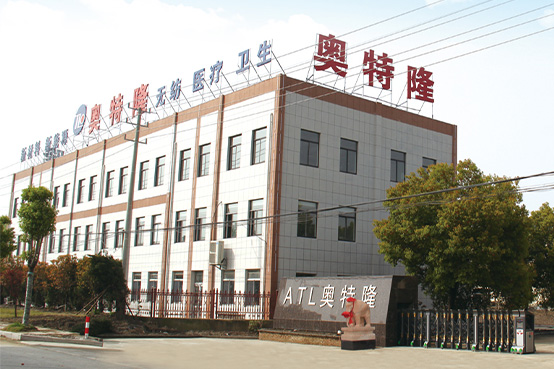
Aotelong builds its construction membrane range in Jiangsu, China, and has obtained CE marking for relevant building products while completing BBA and ICC-ES factory inspections for the construction range. Because the range is manufactured in series, the grade code on the packaging should match the technical datasheet used in the design. You can review the full building construction material range to compare the available membrane, vapor barrier, and tape categories. Aotelong also presented its building envelope products at BAU 2025, the international trade fair for building materials in Munich.
The energy efficiency of a building envelope is never the result of one material. A waterproof breathable membrane contributes in a specific and measurable way: it keeps insulation dry, reduces air leakage, and allows outward drying, working with vapor barriers and sealing tapes to keep the whole assembly in a dry and airtight state. When the grade is selected on the basis of verified test data and installed with continuous detailing, the membrane is one of the most effective measures available for protecting both the energy performance and the structural durability of a building.


© 2024 Jiangsu Aotelong New Materials Co., Ltd.

-
+86-0514-87539226 (Tel)
+86-514-87539218 (Fax)
Tiancheng Road, Shatou Industrial Park, Guangling District, Yangzhou City, Jiangsu.