
 日本語
 Русский
 España
 عرب .

Waterproof Breathable Membrane Applications for Industrial Buildings & Projects
2026-10-21
When a 20,000 square meter steel frame warehouse is wrapped in a membrane that can only handle 800 mm of hydrostatic head, the first wind-driven rain event exposes the entire envelope. Moisture migrates into insulation layers, rusts structural purlins, and produces visible staining within two years. Waterproof breathable membrane applications in industrial projects address a single failure mode: uninterrupted liquid water and vapor control across the building envelope.
What Defines a Waterproof Breathable Membrane?
A waterproof breathable membrane is a functional composite sheet that blocks liquid water and wind-driven rain while allowing water vapor to diffuse outward from the building interior.
This two-way performance separates it from a vapor barrier. A vapor barrier stops vapor in both directions, but a breathable membrane only stops liquid water, letting vapor escape. Industrial buildings with high internal moisture loads - from processing equipment, curing operations, or temperature differentials - depend on that directional behavior to avoid condensation inside the assembly.
 Waterproof Breathable Membrane for Industrial Moisture ControlThis breathable membrane blocks liquid water while allowing vapor to escape, preventing condensation in high-moisture industrial buildings. Available grades from ATL to T260 balance water hold-out, vapor diffusion, and strength.View Product →
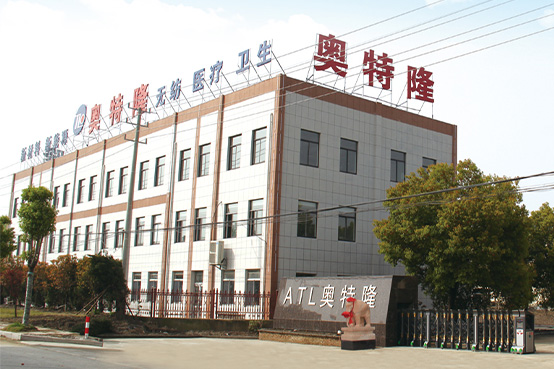
Jiangsu Aotelong New Materials Co., Ltd. manufactures this product family in a graded range, from the lightweight ATL series to higher-grammage grades such as T120, T150, T180, and T260. Each grade is engineered to balance water hold-out, vapor diffusion, and mechanical strength for a different set of industrial conditions.
Core Performance Properties That Matter in Industrial Projects
Four measurable properties - hydrostatic head, SD value, tensile strength, and UV tolerance - determine whether a waterproof breathable membrane survives the construction phase and performs for decades.
Hydrostatic head measures resistance to water penetration. Buildings with long roof spans and no pitched roof overhang need at least 1000 mm. Exposed curtain-wall systems should start at 1500 mm. The SD value, expressed in equivalent meters of still air, is the direct measure of vapor permeability: lower SD means faster vapor escape. A membrane with SD 0.02 m is classed as highly vapor-open.
Mechanical Durability and Installation Survival
Tensile and tear strength determine how the membrane survives handling by installation crews. Industrial roof membranes are often walked on, covered with temporary weights, or subjected to tool placement before cladding arrives. A membrane with low tear strength fails at fastening points and exposes the roof deck to water ingress.
| Property | Low Permeability | High Permeability |
| Hydrostatic Head | 1500 mm | 1000 mm |
| SD Value | 0.05-0.2 m | 0.01-0.03 m |
| Grammage | 120-180 gsm | 80-150 gsm |
| Preferred Use | Roof underlay | Wall and curtain wall |
For industrial envelopes, the critical specification is not the membrane in isolation - it is the combination of hydrostatic head and vapor permeability matched to the internal moisture regime.
Where Waterproof Breathable Membranes Are Applied in Industrial Projects
The largest application volume for waterproof breathable membranes in industrial projects is the external wall assembly of steel frame warehouses and manufacturing facilities.
Steel Frame Envelopes
Steel frame factory buildings rely on a continuous membrane behind the cladding. The membrane protects insulation from rain, prevents interstitial condensation, and stops air movement that degrades thermal performance. It is installed over sheathing or directly over steel purlins with breathable tape at every lap.
Curtain Wall Systems
Curtain wall assemblies face higher wind pressure and need excellent vapor removal from the drainage cavity. High-permeability membranes with an SD below 0.05 m are the standard choice.
Metal Roofing Underlays
On industrial roofs, the membrane serves as a secondary weatherproofing layer under metal panels or standing-seam roofing. It catches water that penetrates through panel lapping or fastener holes and directs it to the eaves. Hydrostatic head and puncture resistance are the controlling properties here.
Synthetic Roofing Underlayment for Timber Frame WallsDesigned for timber frame walls, this membrane over structural sheathing lets trapped moisture dry outward, reducing rot risk. It also serves as secondary weatherproofing under metal panels on roofs.View Product →Wood Frame Industrial Structures
In timber frame facilities, the membrane is placed over structural sheathing. Wood frame has lower tolerance for trapped moisture than steel, and the membrane's role in allowing the sheathing to dry outward is critical.
Cold Storage and Controlled Environments
Cold storage facilities present a special case. The large temperature difference between interior and exterior creates continuous vapor drive from warm to cold side. A vapor barrier is typically placed on the warm side, while a breathable membrane is used on the exterior to let residual moisture escape. Miscalculating this sequence is the most common cause of insulation degradation in industrial cold rooms.
Selection Criteria for Industrial Projects
Specifiers choose a membrane grade by matching hydrostatic head, SD value, and tear strength to the building exposure conditions and internal moisture regime.
- Hydrostatic head: 1000 mm for standard wall assemblies, 1500 mm or higher for exposed curtain walls and roof underlays.
- SD value: below 0.05 m for high-humidity interiors, 0.05-0.2 m for moderate industrial buildings.
- Tear strength: at least 150 N in both directions for roofs where temporary foot traffic is expected.
- Grammage: 80-120 gsm for walls, 120-180 gsm for roofs, with higher values used where insulation density or cladding weight is high.
- UV tolerance: minimum 6 months uncovered exposure, 12 months if site logistics delay cladding installation.
The product naming convention used by Jiangsu Aotelong New Materials - T80, T120, T150, T180, T260 - maps directly to these performance tiers. Higher numbers correspond to higher grammage and generally higher mechanical properties. The T120 grade sits at the practical midpoint for industrial walls, balancing cost against water hold-out.
Installation Practices That Determine Real-World Performance
Even the best membrane grade fails if the installation sequence allows vapor to bypass it or water to find an unsealed lap.
- Check the substrate for sharp protrusions and clean the surface before laying the membrane.
- Install the membrane with the correct face orientation. Some breathable membranes are asymmetric, and the manufacturer installation side must be respected.
- Overlap horizontal laps by 150 mm and vertical laps by 100 mm, with all laps fully taped using a compatible breathable connection tape.
- Tape all penetrations - cable boxes, pipe supports, wall tie brackets - before the outer cladding is fixed.
- Provide a 20 mm ventilation gap between the membrane outer face and the exterior panel or roofline so incidental water can drain and vapor can leave.
- Use continuous battens or discrete fasteners spaced according to wind load calculations. Spacing of 300 mm is common in high wind zones.
For a deeper look at how waterproofing layers interact in the building envelope, read the article on different types of waterproofing in construction.
What to Verify When Choosing a Membrane Supplier
The supplier's manufacturing consistency, certification status, and material traceability are three external factors that separate a reliable industrial membrane from a questionable one.
Verify the factory holds third-party inspection and product certification such as ICC-ES, BBA, and CE. Jiangsu Aotelong New Materials Co., Ltd. lists these certifications for its nonwoven composite product range. In industrial projects where liability extends beyond a single building, the factory audit trail is a document that should be requested during procurement.
Certified Nonwoven Composite with Third-Party VerificationThis nonwoven composite holds ICC-ES, BBA, and CE certifications, ensuring factory audit trails and verified performance. Check documented hydrostatic head and SD values for your batch.View Product →Confirm the specific grade offered has documented hydrostatic head, SD value, and mechanical test data for the batch being shipped. This is the difference between a spec sheet and a verifiable material.
FAQ
What is the difference between a vapor barrier and a waterproof breathable membrane?
A vapor barrier blocks water vapor in both directions. A waterproof breathable membrane blocks liquid water and wind while allowing vapor to diffuse from the interior to the exterior, preventing condensation in walls and roofs.
Can a waterproof breathable membrane be installed directly over plywood or OSB sheathing?
Yes. In wood frame industrial construction, the membrane is placed directly over the structural sheathing or over the insulation layer. The membrane must be fully taped and detailed to prevent liquid water from reaching the substrate.
What grammage should be selected for a large metal roof underlay?
For metal roofing, select a grammage of 120 to 180 gsm with a hydrostatic head of at least 1500 mm. The heavier grade provides better puncture resistance and handling durability during installation.
How long can the membrane stay exposed before cladding is installed?
A membrane with standard UV tolerance can remain exposed for 6 months. Higher tolerance industrial grades can remain exposed for 12 months. The exposure clock starts from material delivery, not from the installation date.


© 2024 Jiangsu Aotelong New Materials Co., Ltd.

-
+86-0514-87539226 (Tel)
+86-514-87539218 (Fax)
Tiancheng Road, Shatou Industrial Park, Guangling District, Yangzhou City, Jiangsu.