
 日本語
日本語 Русский
 España
 عرب .
عرب .
What Is a Waterproof Breathable Membrane? Types, Uses, and Buying Guide
2026-08-20
Consider a lightweight commercial building in a rainy coastal region. Warm interior air carries moisture vapor outward toward the cold underside of the roof, while wind-driven rain pounds the external cladding. Left unprotected, the insulation becomes damp, the structure is exposed to condensation, and the building envelope starts to degrade. A waterproof breathable membrane prevents this sequence of failures. It is a sheet material that keeps liquid water and wind out of the building envelope while allowing water vapor to escape to the outside, and it is now a standard element in walls, roofs, and steel-frame structures.
What Is a Waterproof Breathable Membrane?
A waterproof breathable membrane, also sold as a breathable underlay, house wrap, or weather-resistive barrier depending on the application, is a functional sheet formed by laminating a microporous polyolefin film onto a carrier fabric. The carrier is usually a polypropylene spunbond nonwoven that provides tensile strength, puncture resistance, and a reliable surface for taping and mechanical fixing. The film provides the two technical properties that give the material its name: resistance to liquid water and permeability to water vapor.
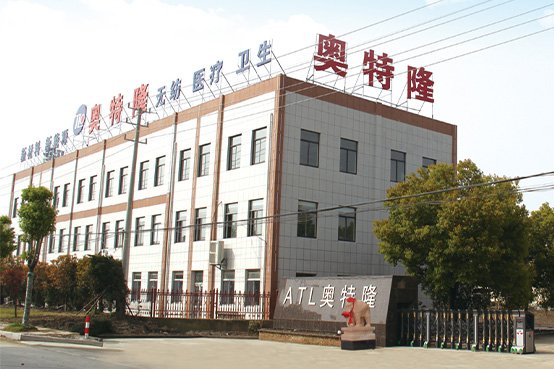
A representative product in this category is the ATL waterproof breathable membrane manufactured by Jiangsu Aotelong New Materials, a film-laminated membrane available in a range of roll sizes for wall and roof use. The same production line extends to a full family of T-series membranes with different grammages, allowing specifiers to match membrane strength to site conditions.
A correctly specified breathable membrane performs four jobs:
- Block wind-driven rain and snow from entering the assembly
- Limit air leakage, which protects the insulation from convective heat loss
- Allow moisture vapor to diffuse outward, helping the assembly dry
- Protect sheathing and insulation during and after construction
How a Waterproof Breathable Membrane Works
The physics behind the material is straightforward. A water vapor molecule is roughly 0.0004 micrometers across, while even a fine water droplet in fog or drizzle measures several micrometers or more. The microporous film in a breathable membrane is engineered with pore sizes that sit between these two dimensions. Liquid water cannot pass because the pores are too small and surface tension holds droplets on the face of the film; water vapor can pass because individual molecules are small enough to diffuse through the pore network.
The Microporous Structure in Practice
This is why a breathable membrane can be installed directly behind the cladding or in the rain-impact zone of a pitched roof. The same sheet that sheds a heavy downpour still allows the wall behind it to dry outward. The practical result is that the structure dries faster after a wet spell, and seasonal moisture that enters through openings can leave again instead of accumulating inside.
Air Tightness and Thermal Performance
A breathable membrane also works as an air-control layer when laps and penetrations are sealed. Air flowing through a gap carries far more moisture than vapor diffusion through a sound film, and uncontrolled airflow washes heat out of the insulation. The membrane's ability to combine water shedding, vapor diffusion, and air resistance in one sheet is the reason it has replaced simple felt underlays and fully vapor-tight wraps in most modern constructions.
Why a Building Envelope Needs a Breathable Membrane
If water enters an assembly and cannot escape, several measurable problems follow. Wet insulation loses R-value because water replaces air in the pore structure; timber and metal components corrode or rot; and condensation creates a surface where mold can develop. A breathable membrane prevents these outcomes by keeping the outboard face of the assembly dry while preserving a drying path to the outside.
- Keeps insulation dry and maintains its rated thermal performance
- Reduces the risk of interstitial condensation in heated buildings
- Protects structural timber, steel profiles, and sheathing boards from moisture damage
- Extends the service life of the whole enclosure and reduces maintenance costs
Waterproof Breathable Membrane vs. Vapor Barrier: What Is the Difference?
The distinction comes down to vapor permeance. A vapor barrier is designed to block the movement of moisture vapor almost completely; a polyethylene vapor barrier can have an Sd value of 20 meters or more. A waterproof breathable membrane, in contrast, has an Sd value typically between 0.02 and 0.05 meters, meaning it offers very little resistance to vapor diffusion. The lower the Sd value, the more breathable the membrane.
| Membrane type | Primary function | Vapor permeance | Typical position |
|---|---|---|---|
| Waterproof breathable membrane | Blocks rain and wind while allowing the assembly to dry outward | High (Sd roughly 0.02 to 0.05 m) | Outboard of insulation or sheathing |
| Vapor barrier | Blocks vapor diffusion into the assembly | Very low (Sd of 20 m or more) | Warm side of the insulation |
| Reflective vapor barrier | Reflects radiant heat and blocks vapor | Very low | Warm side, facing a ventilated air gap |
| Non-vapor-permeable roof underlay | Provides temporary roof protection without outward drying | Very low | Directly below the roof covering |
Using a vapor barrier where a breathable membrane is required, or vice versa, is one of the most common specification errors in building envelopes. For a wider view of how these layers relate to other waterproofing strategies, our article on the different types of waterproofing in construction is a useful starting point.
Low-Permeance and High-Permeance Membrane Grades
Manufacturers produce breathable membranes in different permeance classes because no single product suits every assembly. A high-permeance grade is the right choice for timber frames, steel structures, and most insulated roofs, because these systems rely on drying capacity. A low-permeance grade may be specified when the design intentionally restricts the amount of vapor entering the assembly from outside, or when the interior finish already provides a drying path to the inside.
Grammage is a useful, but not the only, indicator of grade. Within Aotelong's T-series, grammage ranges from 80 to 260 gsm, and each level is tuned for a different combination of strength, water resistance, and handling behavior.
| Model | Grammage | Typical application |
|---|---|---|
| T80 | 80 gsm | Light timber frames and pitched roofs with moderate handling demands |
| T120 | 120 gsm | Standard residential and light commercial wall build-ups |
| T150 | 150 gsm | Commercial walls and roofs requiring better tear resistance |
| T180 | 180 gsm | Industrial projects and rougher site conditions |
| T260 | 260 gsm | Heavy-duty roofs and structures needing maximum mechanical strength |
For a typical residential wall with a ventilated cladding, the T120 waterproof breathable membrane gives a sensible balance between vapor permeability, water resistance, and installation strength.
Key Specifications to Check Before Buying a Membrane
The word "breathable" carries no meaning until it is quantified in a test report. When comparing offers, check four measured values: water resistance (hydrostatic head per EN 1928 or ISO 811), vapor permeability (Sd value per EN ISO 12572, or water vapor transmission rate per ASTM E96), mechanical strength (tensile, trapezoidal tear, and nail tear), and the manufacturer's stated UV exposure limit before the membrane must be covered.
Two membranes may both be called breathable yet differ by an order of magnitude in Sd value. A membrane with an Sd below 0.05 m offers effective drying capacity; a product with an Sd above that range will behave more like a vapor check. Similarly, hydrostatic head values of 1000 mm or more are common in quality products, but the exposure class of the building decides what is sufficient. A high-rise facade in a wind-driven rain zone requires a stronger specification than a sheltered low-rise roof.
Verification from credible bodies matters as much as the numbers. Aotelong reports CE marking, British BBA product certification, ICC-ES factory inspections, and testing by China's National Building Materials Testing Center for its membrane lines, and it has presented its building-envelope products at international trade fairs such as BAU 2025. These details are routine parts of the supplier assessment process for European and North American project teams.
Where and How to Install a Waterproof Breathable Membrane
In a wall build-up, the membrane is placed outboard of the insulation or sheathing, directly behind the cladding. In a roof, it is laid over the rafters or sheathing and below the counter-battens. Laps should follow the manufacturer's stated overlap, and penetrations such as pipes, vents, and windows must be sealed with a tape approved for the specific membrane type.
Sealing is where membranes fail most often in practice. A breathable membrane must not be jointed with a fully vapor-closed tape, because that turns the sealed seams into continuous moisture barriers and defeats the drying function. Use a breathable jointing tape on a breathable membrane and a vapor-barrier tape on a vapor layer. The same logic applies to window openings, which is why breathable and vapor-barrier window tapes are produced as separate products.
On industrial roofs where site traffic and rough handling are likely, a reinforced grade such as the T260 waterproof breathable membrane reduces the risk of tearing and keeps the layer intact until the roof covering is installed.
Common installation defects to avoid:
- Insufficient lap overlap, which allows water to be driven into the joint
- Tears or punctures left unrepaired
- Membrane over-stretched on a warm day, so it splits under thermal movement
- Wrong-side orientation on asymmetric products
- Use of a vapor-closed tape on a vapor-open membrane
How to Choose the Right Membrane for Your Project
The selection order rarely varies. Establish the build-up of the wall or roof, decide the permeance class by checking where the assembly can dry, then compare test data for water column, Sd, and tear strength. Finally, verify that the supplier can produce consistent rolls, certificates, and delivery quantities.
Professional buyers also consider the range as a whole. A manufacturer that produces breathable membranes, vapor barriers, reflective vapor barriers, and window tapes in the same facility can simplify procurement, because every layer of the envelope can be specified from one set of test data and one quality system. Jiangsu Aotelong's building-construction product range is structured in exactly this way, with the T-series membranes at the center of the offer.


© 2024 Jiangsu Aotelong New Materials Co., Ltd.

-
+86-0514-87539226 (Tel)
+86-514-87539218 (Fax)
Tiancheng Road, Shatou Industrial Park, Guangling District, Yangzhou City, Jiangsu.