
 日本語
 Русский
 España
 عرب .

Breathable Roof Underlayment: How Vapor Permeability Affects Insulation Performance
2026-11-04
An underlay can shed every drop of rain that hits it and still let a roof fail from below. In a cold-deck assembly, much of the moisture that degrades mineral wool, wood fibre and OSB sheathing arrives as water vapor diffusing up from the heated space, and the membrane draped over the rafters is the last surface that vapor crosses before it reaches the cold side. Water vapor permeance, declared in perms under ASTM E96 or as an Sd value under EN ISO 12572, decides whether that vapor leaves the assembly or condenses inside it.
The Core Rule: Vapor Resistance Must Fall Outward
A breathable roof underlayment has to meet two requirements at once: it must stop liquid water driven by wind and capillary action, and it must add almost no resistance to water vapor diffusion. The second requirement protects insulation performance, and it is the one most often missing from a purchase specification.
Roofs dry in one direction only. Vapor moves from warm to cold and from higher to lower vapor pressure, which in a heating climate means from the occupied rooms, through the insulation, through the underlay and out past the tiles or metal sheet. Any layer that resists that flow more than the layers beneath it does turns the sheathing into a condensing surface.
Every assembly therefore needs a descending ladder of vapor resistance from inside to outside. North American codes sort materials by measured permeance into three classes, which is a fast way to place a membrane in that ladder before comparing thickness, weight or price.
A vapor-open underlay for a cold pitched roof sits well beyond the Class III ceiling of 10 perms on the open side. Manufacturers commonly declare Sd values between about 0.02 m and 0.1 m, while polyethylene-based barriers declare values in the tens of metres. The gap between those two figures is the whole argument for choosing the membrane by function rather than by price per square metre.
Permeance, Sd and Why Test Conditions Change the Number
Permeance is the steady-state water vapor flux through a unit area of material divided by the vapor pressure difference across it, and Sd restates the same result as the thickness of still air that would resist diffusion equally.
Test conditions move the figure. ASTM E96 sets out a dry cup and a wet cup procedure, and hygroscopic materials generally return a higher permeance in the wet cup because they transmit moisture by absorption as well as by diffusion. Measured permeance also rises with test temperature. Two datasheets are comparable only when the method, the humidity gradient and the temperature match.
In Europe the relevant methods are EN ISO 12572 for water vapor transmission and EN 13859-1 for flexible underlays beneath discontinuous roofing. A CE-marked underlay to EN 13859-1 carries a declared watertightness class, tensile and tear strength, dimensional stability and a water vapor transmission figure, which makes that declaration the document to check before approving a submittal. The full waterproof breathable membrane range should be reviewed against those declarations rather than against a summary sentence.
| Class | Permeance | Typical materials | Where it belongs in a roof |
| Class I | Up to 0.1 perm | Sheet polyethylene, foil-faced boards | Warm side only, never draped over cold rafters |
| Class II | 0.1 to 1.0 perm | Some coated boards and coated felts | Warm side, or where a hygrothermal analysis supports it |
| Class III | 1.0 to 10 perms | Housewraps and certain bitumen felts | Assemblies with a verified drying path |
| Vapor-open | Above 10 perms | Breathable underlays, typically Sd 0.02 to 0.1 m | Cold side, over ventilated pitched roof decks |
How Moisture Cuts Insulation Performance
Wet insulation loses the thermal resistance it was specified for, and declared lambda values stop applying as soon as moisture content rises.
- Winter outward diffusion: in a heating climate, warm indoor air carries vapor into the roof void, and where the underside of the sheathing falls below the dew point, condensation wets the top of the insulation and the deck.
- Summer inward diffusion: dark tiles and metal sheets reach high surface temperatures, which reverses the drive and pushes vapor inward; a low-permeance underlay then holds moisture in the deck with no exit.
- Air leakage rather than diffusion: gaps at penetrations, roof hatches and wall-to-ceiling junctions move far more moisture than diffusion through intact materials, which is why airtightness on the warm side matters as much as the perm rating.
Declared thermal conductivity for mineral wool is measured dry, at a mean temperature of 10 degrees C under EN 13162. It describes a laboratory product, not an assembly that has been wetting and drying through repeated seasons.
The practical consequence is that drying must stay possible in both directions. Construction moisture from wet trades and the first heating season will pass through the assembly; a vapor-open underlay gives it an exit, a vapor-tight one closes the door and moves the problem to the sheathing.
Matching Underlay Type to the Roof Assembly
A vapor-open membrane is the default for ventilated cold pitched roofs, while a vapor barrier belongs on the warm side of the insulation and not under the battens.
Vapor-open membrane
- Declared Sd of roughly 0.02 to 0.1 m
- Draped over rafters, beneath counter-battens
- Releases construction and occupancy moisture
- Depends on an airtight ceiling layer below
Vapor-tight layer
- Declared Sd in the tens of metres
- Fixed on the warm side, joints sealed
- Adds a second control layer if placed cold
- Suited to warm decks and high-humidity buildings
 NP120 Non-Woven Vapor Barrier MembraneA reinforced woven polyethylene underlay with high Sd and W1 water resistance for roof and wall vapour control.View Product →
| Assembly | Dominant vapor drive | Suitable underlay | Verify before ordering |
| Cold ventilated pitched roof, mineral wool at ceiling level | Outward in winter | Vapor-open membrane, Sd of 0.1 m or less | EN 13859-1 declaration, watertightness class, lap widths |
| Warm roof with rigid board above the deck | Low, deck stays warm | Vapor-open membrane; low-permeance layer permitted on the warm side | Continuity of taping at junctions and penetrations |
| Unventilated cathedral ceiling with wood fibre insulation | Outward, high moisture load | High-permeance membrane plus a variable control layer below | Condensation risk analysis to EN ISO 13788 |
| Metal roof over structural deck, high internal humidity | Inward in summer, outward in winter | Warm-side barrier plus vapor-open underlay above the deck | Joint sealing and penetration details |
Installation Details That Decide the Result
Laps, slack and counter-battens decide whether a vapor-open membrane performs as tested, and these details cost nothing to get right at the design stage.
- Confirm the deck is dry. Sheathing should be visibly dry and free of ponding before the membrane goes down, because trapped construction moisture has nowhere to go once the covering is fixed.
- Drape with slight slack. Leave a small amount of give, typically around 10 mm between rafters, so the membrane does not tension across the gap and tear at the fixings.
- Lap consistently. Side and end laps follow the manufacturer declaration; 100 mm side laps and 150 mm end laps are common practice on pitched roofs in Europe.
- Fix vertical counter-battens. Counter-battens above the membrane create a drainage plane and a ventilation path; fixing tile battens straight through a single layer removes both functions.
- Seal and inspect. Tape penetrations, check that no fastener has punctured the membrane below the lap line, and photograph the completed layer before tiling begins.
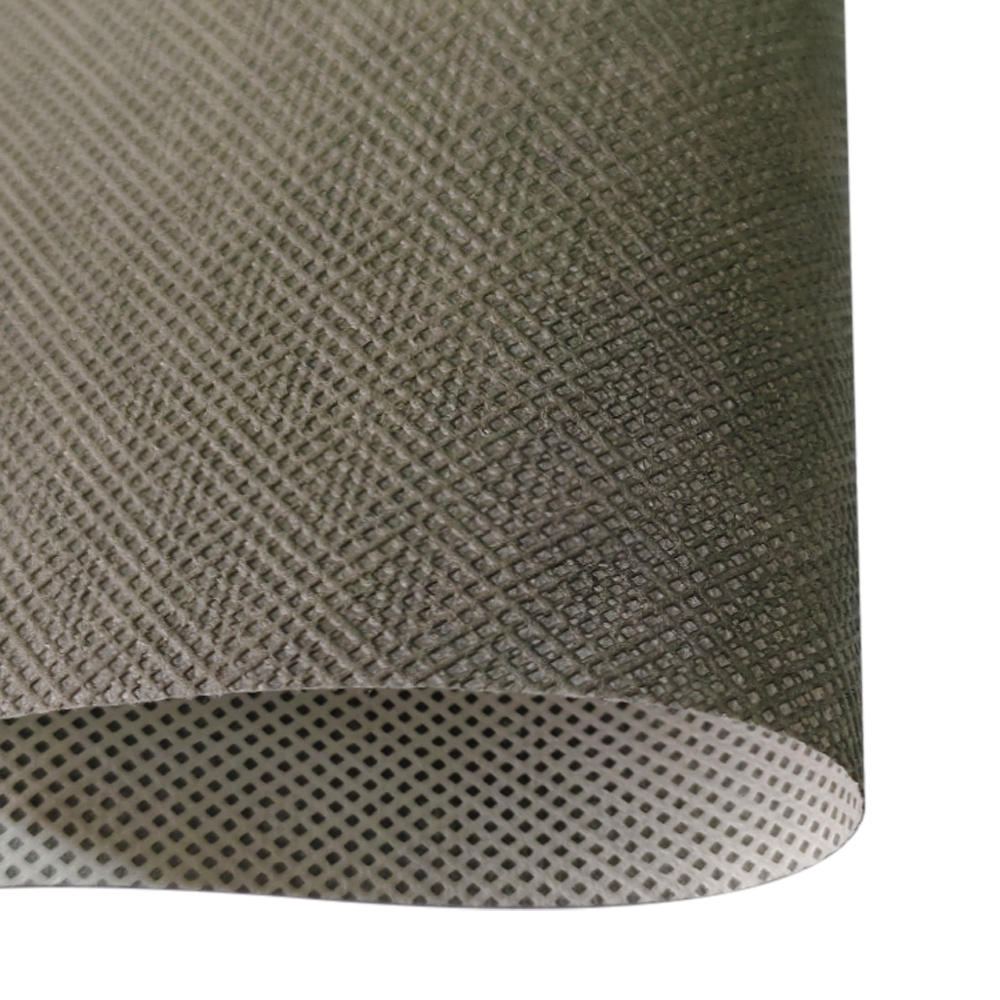 T120 Waterproof Breathable Roof and Wall MembraneThree-layer breather membrane with W1 water resistance, low Sd and 3-month UV resistance for roof and wall assemblies.View Product →
Procurement Checks Before You Approve a Submittal
Four documents settle most underlay decisions: a CE declaration to EN 13859-1, a permeance or Sd test report, a declared watertightness class, and written lap and fixing instructions.
- Test method and conditions on the same page as the permeance figure, stating whether a dry cup or wet cup was used.
- Sd expressed in metres, not a vague claim that the product breathes.
- Watertightness class and tensile strength in both machine and cross direction.
- Temporary exposure limit in weeks, relevant when the covering is delayed.
- Reaction to fire class where the roof sits close to a boundary.
Jiangsu Aotelong New Materials Co., Ltd., which also uses the name Zhongning New Materials Jiangsu Co., Ltd., produces breathable membranes in five declared grades from T80 to T260 alongside PE-based barriers and foil-faced reflective membranes at its base in Yangzhou. The company states that its PP spunbond nonwovens and breathable membranes have been tested by the National Building Materials Test Center and hold CE and BBA certification, with ICC-ES and BBA factory inspections. Buyers comparing systems can also review the broader discussion of different types of waterproofing in construction before fixing a specification.
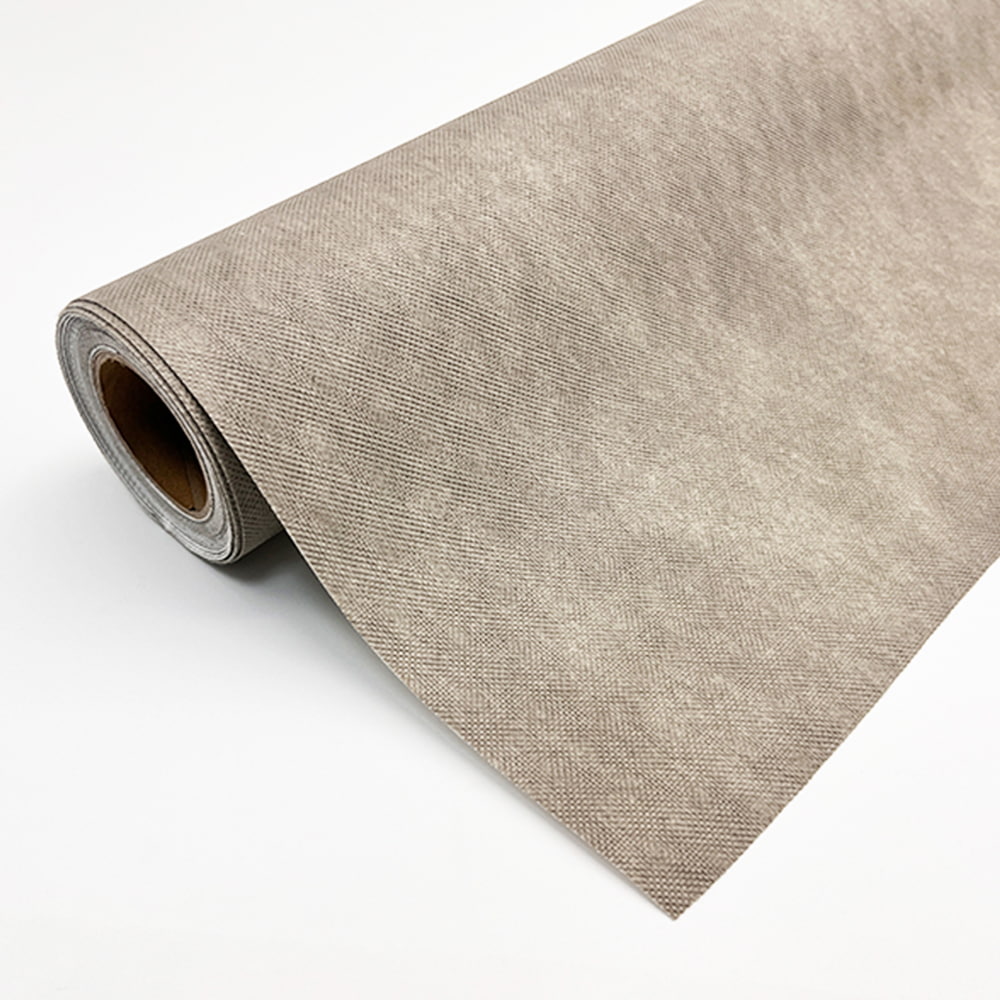 Altaron SRU-260 Synthetic Roofing UnderlaymentA 260 g/m² composite underlay for pitched and low-slope roofs, offering W1 water resistance and up to 3 months' temporary UV exposure.View Product →
Practical Questions From Specifiers
Does a breathable underlay remove the need for roof ventilation?
No. A vapor-open underlay lowers the vapor resistance of the covering layer, but it does not replace ventilation or an airtight ceiling. BS 5250, the code of practice for condensation control, requires the ceiling control layer, the ventilation path and the insulation to be assessed together, and BS 5534 governs how underlays and battens are fixed.
What permeance should be specified for a cold pitched roof?
Specify a membrane with a declared Sd of 0.1 m or less and a CE declaration to EN 13859-1. Membranes between 0.02 m and 0.1 m are the usual band for vapor-open underlays; a product declared in the tens of metres is a vapor barrier and belongs on the warm side of the insulation.
Is a higher perm rating always better?
No. Permeance only helps when the vapor source is below the membrane and a drying path exists above it. In buildings with sustained high internal humidity, such as laundries or indoor pools, the control layer moves to the warm side, and an open underlay above the deck is still specified to let the deck dry outward.
How do I compare an Sd value with a perm rating?
Sd is the equivalent air layer thickness in metres, and permeance in perms is the flux at a stated pressure difference. As a rough guide, an Sd of 0.1 m corresponds to a few tens of perms under the same conditions, but the conversion holds only when temperature and humidity match, so request both figures from a single test report.


© 2024 Jiangsu Aotelong New Materials Co., Ltd.

-
+86-0514-87539226 (Tel)
+86-514-87539218 (Fax)
Tiancheng Road, Shatou Industrial Park, Guangling District, Yangzhou City, Jiangsu.