
 日本語
日本語 Русский
 España
 عرب .
عرب .
Future Trends of Waterproof Breathable Membrane Technology for Building Construction
2026-09-21
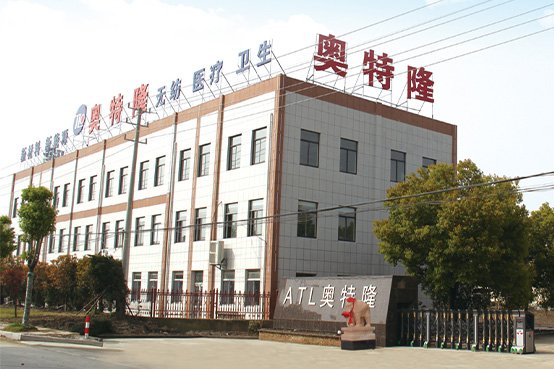
A high-rise curtain wall system in a humid coastal climate will cycle through condensation and solar gain every day. When the vapor control layer fails, insulation loses efficiency, and metal fasteners begin to corrode within months. This is the practical challenge driving advances in waterproof breathable membrane (WBM) technology. For Jiangsu Aotelong New Materials Co., Ltd., a manufacturer of nonwoven composite materials based in Yangzhou, the trajectory is no longer about a single waterproof sheet, but about an engineered system that manages moisture, air movement, and thermal performance across the entire building envelope.
 Composite Nonwoven Fabrics and Laminated SMS/SMMS ManufacturerOffers engineered nonwoven composite materials certified by ICC-ES, BBA, and CE for building envelope moisture control, addressing condensation and corrosion risks in coastal high-rise curtain wall systems.View Product →
What Defines a Waterproof Breathable Membrane Today
A waterproof breathable membrane is an engineered building material that allows water vapor to pass through its microporous structure while blocking liquid water and air infiltration. This definition is central to modern envelope design, where the control of moisture movement is as important as the control of heat flow.
- MVTR (g/m2/24h): the primary measure of vapor permeability.
- Water resistance (mm): the pressure head the membrane withstands before leakage.
- Air permeability (l/m2/s): the volume of air passing through the fabric under pressure.
- Tear strength (N): the ability to resist installation damage on top of rough insulation or joists.
Understanding the difference between these two classes is critical. For specifiers and roofers, choosing the wrong permeability class can convert a moisture-proof assembly into a condensation trap.
| Specification | Low-Permeability Type | High-Permeability Type |
| MVTR (g/m2/24h) | 20-40 | 150-300 |
| Water resistance (mm) | 150-200 | 100-150 |
| Air permeability (l/m2/s) | 0.1-0.3 | 0.5-1.2 |
A detailed overview of the different types of waterproofing in construction can help place these membrane classes within the broader envelope strategy.
Different types of waterproofing in constructionBuilding Construction Nonwoven Fabric Solutions with Certified PerformanceProvides ALTARON Barrier membranes and synthetic roofing underlayment for effective air and water infiltration prevention while allowing vapor escape, suitable for diverse waterproofing strategies.View Product →Five Technology Trends Reshaping Waterproof Breathable Membranes
The next generation of waterproof breathable membranes is being defined by five distinct innovation paths that combine material science with field performance data.
Trend 1 - Smart Moisture-Regulating Membranes
Smart membranes use humidity-sensitive additives that adjust pore geometry with changing relative humidity inside the wall cavity. The result is a membrane that breathes more when the cavity is wet and less when it is dry, preventing moisture buildup without increasing air leakage.
Trend 2 - Nanofiber and Electrospun Structures
Electrospun nanofiber interlayers create high MVTR with low air leakage. A single nanofiber layer can replace a thicker nonwoven layer, reducing total material weight while improving performance.
Advanced Nonwoven Membranes Integrating Nanofiber and Recycled ContentFeatures innovative nonwoven technologies including electrospun nanofiber interlayers and recycled polypropylene blends, offering high MVTR with low air leakage and comparable mechanical strength.View Product →Trend 3 - Recyclable and Bio-Based Polymers
Recycled content is not a future promise. Fiber producers in Europe and Asia have confirmed 30-40% recycled polypropylene blends in commercial breathable membrane lines, with comparable mechanical performance.
Trend 4 - Multilayer Composites with Integrated Functions
Multilayer structures combine a vapor-permeable core with reflective, insulation, or reinforcement layers. This reduces installation layers on site, which matters for labor cost and risk of installation errors.
Trend 5 - Self-Healing and Durability Enhancements
Microencapsulated healing agents in the coating layer respond to local punctures, closing the damage before moisture migrates. This approach is still moving through field trials, but it represents a genuine extension of membrane lifespan.
Material Science Breakthroughs with Real-World Impact
The most consequential material shift is the transition from simple spunbond composites to engineered multilayered systems with controlled pore geometry. On construction sites, this shift shows up in two ways. First, lighter materials that still meet local water resistance codes reduce handling risk on high-rise work. Second, more precise pore geometry means a membrane can deliver both high MVTR and low air permeability, which was historically a trade-off.
For example, a membrane grade that achieves 280 g/m2/24h MVTR with a water resistance of 120 mm can serve a ventilated facade, while a lower-permeability grade is better suited to an airtight, unventilated roof assembly. This distinction is what makes the membrane a functional component of the envelope, not just a moisture barrier.
What Builders and Specifiers Should Watch
For procurement and site teams, the future membrane spec decision will rest on three measurable criteria: tested performance, certification traceability, and supply stability.
Performance-Led Selection
Focus on MVTR, water resistance, air permeability, and long-term aging data.
Supply-Led Selection
Evaluate stable availability across seasons, consistent release specifications, and lead times for multiple projects.
| Factor | What to Examine | Why It Matters |
| Performance | MVTR, water resistance, air permeability | Directly controls envelope behavior |
| Certification | BBA, CE, ICC-ES factory inspection | Required for regulatory compliance |
| Supply | Batch consistency, lead time, export packing | Affects project schedule and risk |
BBA and CE marks remain the baseline for European markets, while ICC-ES factory inspection matters for North American projects. But the more forward-looking question is whether the membrane manufacturer can demonstrate consistent batch performance across multiple production runs.
The practical takeaway is simple. Aotelong's ATL waterproof breathable membrane series spans T80 to T260, covering both low- and high-permeability applications, and the company is positioned to integrate future smart and recyclable features as those technologies move from research to commercial production.
Frequently Asked Questions
These are the questions most often raised when teams evaluate a waterproof breathable membrane specification.
Prediction on Membrane Technology Growth
The technology is moving toward smart moisture regulation, nanofiber structures, and recycled content, driven by energy codes and envelope performance requirements. This is not a marketing phrase; it is the measurable direction of published research and industry test data.
High-Permeability vs. Low-Permeability Membrane
High-permeability membranes have a higher MVTR and are used in ventilated facades. Low-permeability types are selected for vapor control in unventilated assemblies to avoid condensation inside the structure.
Can Waterproof Breathable Membranes Be Recycled?
Recyclable options are emerging. Polypropylene-based membranes are technically recyclable, and material suppliers in Asia and Europe are running commercial trials with 30-40% recycled content.
What Performance Tests Matter Most?
The critical tests are MVTR, water resistance, and air permeability. Certification to BBA, CE, or ICC-ES provides the traceability required for building compliance.
In commercial practice, a membrane spec is only as good as the installation detail. Always verify the manufacturer's installation guide before approving a substitution.


© 2024 Jiangsu Aotelong New Materials Co., Ltd.

-
+86-0514-87539226 (Tel)
+86-514-87539218 (Fax)
Tiancheng Road, Shatou Industrial Park, Guangling District, Yangzhou City, Jiangsu.