
 日本語
日本語 Русский
 España
 عرب .
عرب .
How Waterproof Breathable Membranes Are Made: Three Manufacturing Methods Explained
2026-09-28
Why the Manufacturing Method Sets the Performance Ceiling
When an architect specifies a wall assembly, the waterproof breathable membrane is never the most visible component. Yet its production method decides how much water pressure the assembly can resist and how quickly trapped moisture can escape. In practical terms, the manufacturing route controls the membrane's pore geometry, thickness uniformity, and long-term durability under UV and temperature cycles. That is why the question of how waterproof breathable membranes are made is not just an engineering curiosity; it is a procurement consideration.
The industry relies on three core manufacturing methods: melt extrusion, biaxial stretching, and electrospinning. Each produces a different pore structure, and each method has its own cost and performance trade-offs. Before comparing products, it helps to understand the two mechanisms these processes exploit.
The Two Membrane Mechanisms You Need to Know
Waterproof breathable membranes achieve their contradictory performance by either repelling liquid water while allowing vapour through tiny physical pores, or by absorbing water vapour and transporting it through a dense polymer layer. The first type is a hydrophobic microporous membrane; the second is a hydrophilic non-porous membrane.
In a microporous membrane, the pores are typically between 0.1 and 2 micrometres. Liquid water droplets cannot pass because they are thousands of times larger, but water vapour molecules, which are less than 0.001 micrometres, move through easily. In a hydrophilic non-porous membrane, there are no open pores at all. Instead, water molecules dissolve into the polymer surface and diffuse to the other side. Hydrophilic membranes are usually produced as dense films from polyurethane or copolyester by melt extrusion, but they are more common in high-performance clothing than in building wraps. The manufacturing process determines which of these structures you get and how uniformly it is formed.
Three Ways Waterproof Breathable Membranes Are Made
Three processes dominate the market. Each one is suitable for different performance targets, so it is worth understanding how they differ.
Melt Extrusion: The Workhorse for Building Membranes
Melt extrusion is the most common method for producing architectural waterproofing membranes. The process starts with a thermoplastic polymer, usually polyethylene or polypropylene, mixed with fine mineral filler such as calcium carbonate. The mixture is heated and extruded through a slot die into a thin film. The film is then cooled and uniaxially stretched in the machine direction, causing micro-cracks to form around the filler particles. These voids become the breathable pores.
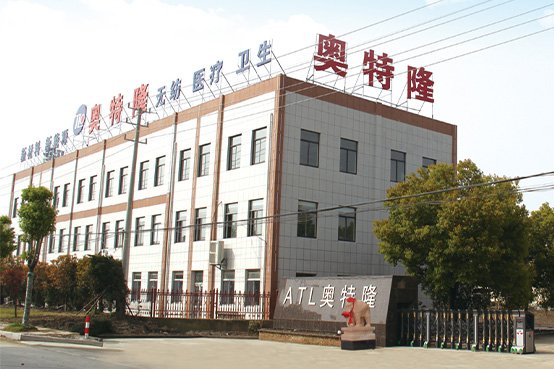
The key advantage of melt extrusion is scalability. Once the formulation and stretch ratio are set, the line can run continuously with consistent pore size and water resistance. This makes it the preferred method for low-cost, high-volume building envelopes. The same approach is used to produce our ATL waterproof breathable membrane series, which is designed for rained screens, roofs, timber frame walls, and steel frame walls.
However, melt-extruded films can be brittle at low temperatures if the filler content is excessive. For demanding climatic regions, the extrusion parameters need careful tuning to balance tear strength and vapour permeability. That is why reliable suppliers publish characteristic values rather than just a single waterproof label.
Biaxial Stretching: Tightening Pore Control
Biaxial stretching is often combined with extrusion to improve pore uniformity. The film is stretched in both machine and transverse directions while heated, which enlarges the voids and makes them more uniform. The result is a higher water vapour transmission rate because the pores are better connected and the overall porosity is higher.
The trade-off is that biaxial stretching requires more complex equipment and tighter process control. Slight variations in film temperature or stretching speed create pin-hole defects that can ruin a whole batch. For this reason, biaxial-stretched membranes are often used in premium building products where the specifier demands a minimum moisture vapour transfer rate. For example, our T120 waterproof breathable membrane is processed to provide a balanced combination of hydrostatic head and moisture vapour transfer for insulated roof and wall applications.
Electrospinning: Nanofibres for High-Performance Textiles
Electrospinning is fundamentally different. Instead of forming a continuous film, the process uses a high-voltage electric field to draw polymer solutions into nanoscale fibres. These fibres collect on a substrate to form a highly porous nonwoven mat. Because the pores are extremely small but the fibre surfaces are enormous, electrospun membranes can achieve exceptional breathability without sacrificing water resistance.
This technology is more expensive and slower than melt extrusion, so its use is concentrated in protective clothing, wound dressings, and high-end outdoor fabrics. It is also an area where the boundary between technical textiles and building products starts to blur. For more on the medical-side applications, read the related guide to medical nonwoven fabrics.
From Film to Composite: How Membranes Become Building Products
A bare membrane is rarely used directly on a construction site. In practice, it is laminated to a nonwoven or woven substrate to provide mechanical strength, puncture resistance, and easier handling. The lamination method, whether hot-melt adhesive, extrusion coating, or thermal bonding, has as much influence on the final product's performance as the membrane itself.
In building enclosure systems, the membrane is typically bonded to polypropylene nonwoven fabric. The fabric protects the film during installation and creates a stable surface for taping. The same composite structure is used in high-permeability T260 membrane, where a higher vapour flow is required and the product needs to stand up to rough handling on site. Because the nonwoven and the membrane are joined before the roll is packed, the quality of the adhesion determines whether the layers will delaminate after years of exposure.
When comparing suppliers, ask not only what the membrane is made of, but how the composite is manufactured. A poorly bonded laminate can fail even if the membrane itself has excellent properties.
Reading the Specs: Comparing Membrane Performance
Manufacturers usually list three numbers: hydrostatic head, water vapour transmission rate, and tensile or tear strength. Hydrostatic head measures how much water pressure the membrane can withstand before leaking. Vapour transmission rate, often tested to ASTM E96 or ISO 12572, measures how quickly moisture passes through. Tear strength tells you whether the membrane will survive nailing, folding, and wind uplift.
The table below summarises the three manufacturing methods and what they mean for performance.
| Method | Pore type | Typical hydrostatic head | Typical vapour transmission | Common applications |
|---|---|---|---|---|
| Melt extrusion | Microporous, randomly distributed | High | Moderate | Building underlays, roofing, wall wrap |
| Biaxial stretching | Microporous, more uniform | High to very high | High | Premium building membrane, roofing |
| Electrospinning | Nanofibre mat | Moderate to high | Very high | Protective clothing, medical textiles |
| Comparison of the three main production routes for waterproof breathable membranes. | ||||
The numbers are not fixed; they depend on polymer grade, filler type, and thickness. That is why specifiers should always verify test results for the exact product grade they plan to use. The distinction between low-permeance and high-permeance membranes matters greatly in cold climates, where inward vapour drive can cause condensation. A good overview of the broader choices is available in the article about different types of waterproofing in construction.
Choosing the Right Manufacturing Technology for Your Project
The best manufacturing method depends on the building system and the climate. If you want a low-cost, robust wall underlay for a standard drywall assembly, melt-extruded microporous membrane is usually sufficient. If the project involves a ventilated facade or a warm roof that must dry in both directions, a biaxial-stretched product with a higher vapour flow rate gives more safety margin. If the application is in a highly insulating closed cavity, you need a membrane that will not trap moisture at the back of the insulation.
For construction buyers, the practical takeaway is to specify the required performance range, not the brand. Choose a supplier that can document consistent manufacturing control and provide sample rolls for on-site testing. Because the production process determines everything from permeability to UV resistance, a membrane that works well on paper can perform poorly if its manufacturing line is not stabilised.
At the same time, keep the product range manageable. Standardising on one or two membrane grades across projects simplifies procurement, training, and quality assurance. Most leading building material manufacturers offer a graded family of membranes, from light- and heavy-duty to low- and high-permeance, so the technical decision becomes a property selection rather than a supplier selection.


© 2024 Jiangsu Aotelong New Materials Co., Ltd.

-
+86-0514-87539226 (Tel)
+86-514-87539218 (Fax)
Tiancheng Road, Shatou Industrial Park, Guangling District, Yangzhou City, Jiangsu.