
 日本語
日本語 Русский
 España
 عرب .
عرب .
Types of Waterproof Breathable Membranes Explained: A Practical Guide for Specifiers
2026-09-29
When a wall assembly traps moisture, the first signs are subtle: stained sheathing, peeling paint, and an insulation system that quietly stops working. The cause is usually not a lack of waterproofing but a mismatch between waterproofing and vapor permeability. A waterproof breathable membrane solves that mismatch by keeping liquid water out while allowing water vapor to escape, yet the three fundamentally different membrane types do the job in different ways, and each one behaves differently in the wall. The three types are hydrophobic microporous membranes, hydrophilic non-porous membranes, and composite multi-layer membranes. Your choice should depend on climate, assembly design, and the declared performance values, not on habit.
What makes a membrane waterproof and breathable
The entire product category rests on a size difference. A liquid water droplet is roughly 100 to 600 micrometers across, while a water vapor molecule is about 0.0004 micrometers. A typical microporous membrane opens the door to the vapor and closes it to the droplet: its pores range from about 0.1 to 1.0 micrometers, large enough for vapor molecules and far too small for droplets. The hydrophobic polymer keeps the pores from wetting, so liquid water stays out until the hydrostatic pressure exceeds the membrane's rating.
Non-porous hydrophilic membranes take a completely different route. They contain no holes at all. Their polymer chemistry adsorbs water vapor on the warm, humid side of the film, diffuses the molecules through the structure, and releases them on the drier side.
Those two mechanisms are measured with two numbers that every specifier should know. Water resistance is reported as hydrostatic head in millimeters of water column (ISO 811); for building membranes, declared values typically range from 1,000 to 5,000 mm. Breathability is reported either as a moisture vapor transmission rate (MVTR) in grams per square meter per day, or as the Sd value, which is the water-vapor-diffusion-equivalent air layer thickness. The lower the Sd value, the more breathable the membrane.
Hydrophobic microporous membranes
How they work
Microporous membranes for construction are usually made from polypropylene, polyethylene, or another water-repellent polymer. In a typical manufacturing process, the polymer is extruded and stretched to form a dense network of micropores, then laminated onto a nonwoven carrier such as polypropylene spunbond. The carrier is what provides tear strength and the stiffness that allow the membrane to be fastened and worked on site.
Strengths and real-world limits
The microporous structure delivers strong water resistance and strong vapor permeability at the same time, at a reasonable cost. But the pores are mechanical features and they have the limits of mechanical features: they can be flattened under compression, blocked by dust, and the whole barrier can be defeated by a single fastener penetration left unsealed. That is why joints and penetrations must be closed with a compatible tape, and why many roof systems still include a ventilated cavity on the outer side.
Hydrophilic non-porous membranes
How they work
A hydrophilic membrane is a continuous polymer film, typically based on polyester or polyether chemistry. There are no openings, so the membrane is inherently airtight and remains waterproof even if the surface is scratched or abraded. Moisture travels through the film in three steps: adsorption on the side with higher vapor pressure, diffusion along the polymer chains, and desorption on the drier side.
Strengths and real-world limits
The strength of this system is its airtightness, which makes it valuable in assemblies where air leakage is a bigger risk than liquid water. The trade-off is that performance depends on a vapor pressure difference across the film. When the humidity gradient is weak, diffusion slows down. That is why pure hydrophilic films are less common in building envelopes, where drying conditions change with the season. What the building industry usually buys instead is a composite that combines the film with a stronger carrier.
Composite and multi-layer membranes
In practice, almost every waterproof breathable membrane sold for construction is a composite. The functional film, whether microporous, hydrophilic, or a combination of both, is laminated onto a nonwoven fabric, and sometimes a reinforcing mesh is added. The membrane type matters, but the substrate weight, the lamination quality, and the declared system values determine whether the product survives installation and performs in the wall. This is also why the same membrane type is offered in several grades: heavier substrates withstand rough jobsites, while lighter ones trim cost and speed up handling.
How to measure and specify a waterproof breathable membrane
Specifying a breathable membrane without test data is an exercise in trust. The table below shows the typical declared properties that matter for building underlays and the test methods used to verify them.
| Property | Test method | Typical range | Why it matters |
|---|---|---|---|
| Water resistance (hydrostatic head) | ISO 811 | 1,000 - 5,000 mm | Indicates how much liquid water pressure the membrane can resist before leakage. |
| Water vapor permeability | EN ISO 12572 (Sd value) | Sd 0.02 - 0.2 m | Lower Sd means higher drying capacity for the wall or roof assembly. |
| Resistance to tearing | EN 12311 / EN 12310 | 150 - 300 N/50 mm (typical) | Determines whether the membrane survives fastening and wind forces on site. |
| Temperature resistance | EN 13859 | -40 °C to +80 °C (typical) | Confirms the membrane will not become brittle in winter or soften under dark roofing in summer. |
Two values should be checked together: the hydrostatic head and the Sd value. A high hydrostatic head proves the membrane can resist rain and wind-driven water; a low Sd value proves the assembly can still dry. If a datasheet gives only one of the two, ask for the full test report before you decide.
Choosing the right membrane for your building assembly
Match the permeance to the climate
Start with the rule of thumb for heating-dominated climates: place a vapor barrier on the warm side of the insulation and a breathable membrane on the cold side, so winter moisture can escape outward. In hot-humid climates the logic reverses; drying inward is often more important, and the high-permeance membrane sits on the outside. In both cases the task is the same: prevent the assembly from accumulating moisture. For a wider view of how liquid water, vapor, and air control fit together, our overview of the different types of waterproofing in construction walks through the relationships between them.
Within the breathable category, the ATL waterproof breathable membrane is a nonwoven-based product in the breathable range, suitable for wall and roof underlays where outward drying is a priority.
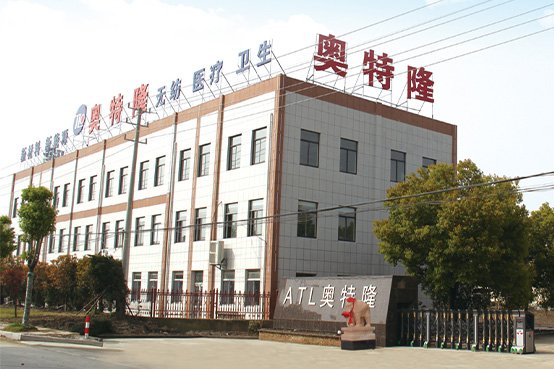 Composite SMS/SMMS Nonwoven Fabrics Manufacturers, FactoryJiangsu Aotelong New Materials Co., Ltd. is China composite nonwoven fabrics manufacturers and laminated non woven fabric factory, offer ...View Product →
Use the grade range to control cost and installation risk
The substrate weight changes the behavior on the jobsite. A lightweight membrane is cheaper and easier to cut, but it offers less puncture resistance against rough surfaces and fastener points. A heavier membrane survives site traffic and compression better, at a higher price. In service, the difference usually shows up as the number of repair patches required after installation. Aotelong's breathable membrane series runs from the lightweight T80 to the heavy-duty T260; the T150 waterproof breathable membrane is the middle grade and a common specification for timber-frame wall applications.
Composite SMS/SMMS Nonwoven Fabrics Manufacturers, FactoryJiangsu Aotelong New Materials Co., Ltd. is China composite nonwoven fabrics manufacturers and laminated non woven fabric factory, offer ...View Product →Do not confuse a breathable membrane with a vapor barrier
This is the most common sourcing mistake in the category. A breathable membrane lets water vapor pass through during the drying season; a vapor barrier deliberately blocks it. They are used on different sides of the same assembly, and swapping one for the other creates a moisture trap inside the wall. Aotelong's product family covers both sides of that distinction: the breathable membranes go on the exterior face, while the NP120 non-woven vapor barrier is built for the warm side. To keep the whole specification consistent, the building construction nonwoven product range includes membranes, vapor barriers, reflective composites, and window tapes in one catalog.
Composite SMS/SMMS Nonwoven Fabrics Manufacturers, FactoryJiangsu Aotelong New Materials Co., Ltd. is China composite nonwoven fabrics manufacturers and laminated non woven fabric factory, offer ...View Product →What to check before you buy
Two suppliers can offer a "waterproof breathable membrane" with identical words and very different physics. The words are uncontrolled; the declared values are not. Before accepting a delivery, run these four checks:
- Confirm that the hydrostatic head and the Sd value are printed in the technical data sheet and supported by a test report from a recognized laboratory.
- Weigh the roll on arrival. A delivery that is short on length or light on grammage is a hidden cost that disappears into the wall.
- Inspect the lamination edge and the roll width. Weak edge bonding shows up later as tearing at overlaps.
- Ask for samples of two adjacent grades. The difference in stiffness and hand feel tells you more about handling behavior than any brochure.
Certification is the shortcut to that data. Aotelong's waterproof breathable membranes carry CE marking and UK BBA certification, the factory is subject to regular ICC-ES and BBA audits, and the PP spunbond carrier fabrics are tested by the National Building Materials Testing Center in China. When a manufacturer can show those documents, the declared values are verified, not invented.
The type of membrane matters less than the way it is placed in the wall assembly. Match the permeance to the climate, verify the declared values against the certification, and keep the full set of components, membrane, vapor barrier, and tape, from a source that can document consistent quality. A breathable membrane specified that way is invisible, and that is exactly what a good building material should be. The same membrane specified on the wrong side of the wall, or documented only by adjectives, is a gamble you will not be able to smell until the first cold season.


© 2024 Jiangsu Aotelong New Materials Co., Ltd.

-
+86-0514-87539226 (Tel)
+86-514-87539218 (Fax)
Tiancheng Road, Shatou Industrial Park, Guangling District, Yangzhou City, Jiangsu.