
 日本語
 Русский
 España
 عرب .

Single Layer vs Multi Layer Waterproof Breathable Membranes: Complete Guide
2026-10-28
On a 5,000 square meter steel-frame warehouse, the specifier's decision between a single layer and a multi layer waterproof breathable membrane sets the hydrostatic head anywhere from about 1,200 mm to more than 8,000 mm, and it decides whether the wall cavity dries out or traps moisture for the life of the building. Both constructions can be vapor-permeable; the difference is how much water they stop and how long they survive on site.
01What the terms actually mean
A single layer waterproof breathable membrane is a monolithic polyolefin film, usually polyethylene or polypropylene, whose microporous structure both stops liquid water and lets vapor pass. There is no separate reinforcing carrier, so the same material must deliver water tightness, vapor permeability and mechanical strength at once.
- One microporous PE or PP film
- No carrier or a very light scrim
- Light at 60-120 gsm
- Fast to unroll, easy to wrap details
- Spunbond or woven carrier plus functional film
- Optional protective scrim or reinforcement
- Heavier at 150-300 gsm
- Higher tear and puncture resistance
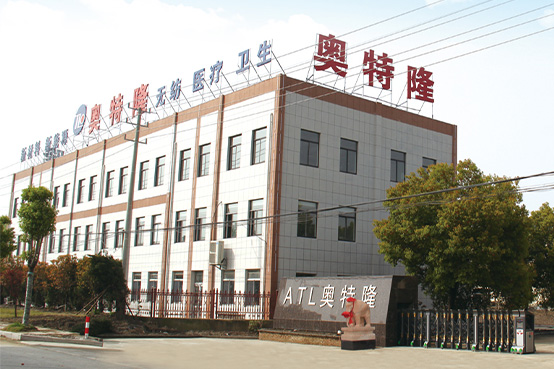
Jiangsu Aotelong New Materials Co., Ltd., a nonwoven and composite materials manufacturer in Yangzhou, China, produces both constructions in the ATL membrane series. The waterproof ATL breathable membrane line spans grades from T80 to T260, covering thin single-layer films up to reinforced multi-layer composites for heavy-duty walls and roofs.
 Composite SMS/SMMS Nonwoven Fabrics Manufacturers, FactoryJiangsu Aotelong New Materials Co., Ltd. is China composite nonwoven fabrics manufacturers and laminated non woven fabric factory, offer ...View Product →
02Performance, head to head
Layer count is not a quality score; it is a performance lever. The hydrostatic head, Sd value and mechanical strength all shift when a carrier is added under or over the film.
| Property | Single layer | Multi layer |
| Water column resistance | 1,000-2,500 mm | 4,000-10,000 mm |
| Vapor permeability (Sd) | 0.02-0.08 m | 0.02-0.15 m, film dependent |
| Tensile strength | Low | 2 to 4 times higher |
| Puncture and tear resistance | Low | High, carrier reinforced |
| Typical weight | 60-120 gsm | 150-300 gsm |
| Detail flexibility | Easy to fold and wrap | Stiffer, needs precut strips |
| Damage tolerance on site | Low | High, fewer callbacks |
03The water-vapor balance
The membrane must be at least as vapor-open as the rest of the wall assembly, or condensation appears inside the cavity. This balance is expressed as the Sd value - the thickness of a still air layer that offers the same vapor diffusion resistance. An Sd below 0.1 m is considered vapor-open for most timber and steel frame walls.
Low permeability grades
Low-permeability membranes such as the T80 low-permeability membrane suit cold, dry climates and unheated structures, where vapor drive is low and a tighter film still passes enough moisture. They are lighter and cost less per square meter, and they perform well in roof underlay applications with short exposure periods.
Composite SMS/SMMS Nonwoven Fabrics Manufacturers, FactoryJiangsu Aotelong New Materials Co., Ltd. is China composite nonwoven fabrics manufacturers and laminated non woven fabric factory, offer ...View Product →High permeability grades
For humid climates, heated buildings and occupied roofs, specify a high-permeability composite. The T260 high-permeability membrane grade, built as a multi layer construction, keeps the Sd low while adding the mechanical strength needed for purlin-supported roofs and longer exposure intervals during installation.
Composite SMS/SMMS Nonwoven Fabrics Manufacturers, FactoryJiangsu Aotelong New Materials Co., Ltd. is China composite nonwoven fabrics manufacturers and laminated non woven fabric factory, offer ...View Product →04Installation and on-site durability
The membrane that performs best in a lab can fail on site if it cannot survive handling. Crews walk on it, wind pulls at laps, and screw threads catch the film before the cladding goes on.
- Single layer membranes unroll fast and wrap tightly around corners, but they tear on protruding screws and punctured nail holes spread under wind load.
- Multi layer composites tolerate foot traffic and fastener heads better; a torn carrier edge can be taped, while a torn monolithic film often stays torn.
- Lighter grades such as T80 suit one-person crews; heavier grades such as T180 and T260 need two people but cut weather delays from accidental damage.
- Both types require every lap and detail to be closed with the membrane manufacturer's tape system within the recommended window.
Membrane performance depends on the whole system. On the warm side of the insulation, complete the wall with vapor barrier membranes, and at window and door openings use compatible breathable and vapor barrier window tapes to keep the air and vapor control layer continuous.
05Cost and life-cycle economics
Single layer films carry a lower initial price, typically 20-40 percent less per square meter than a comparable multi layer composite. But material cost is the smallest part of a wall assembly's total cost.
Specify by required class, not by price alone. Installers report fewer weather holdbacks and fewer callbacks with reinforced composites, because the membrane is walked on, stretched and nicked on site and still performs. That is the same system-level logic covered in our overview of different types of waterproofing in construction, where assembly behavior matters more than component price.
06How to choose: a four-step check
Choose the membrane by matching moisture load, code class, substrate and installation period, in that order.
- Assess the moisture load: heated and humid interiors push more vapor outward, so require an Sd of 0.05 m or lower.
- Confirm the code class: wall underlays in most European markets require W1 water tightness at 1,500 mm, which rules out thin single layers.
- Match the substrate: steel purlins and rough sawn timber need a carrier-reinforced multi layer membrane, while smooth plywood can accept a lighter film.
- Check the schedule: if the membrane stays exposed longer than four weeks, choose a heavier composite with better UV tolerance.
07Frequently asked questions
Is a single layer membrane ever sufficient?
Yes, but only for temporary weather protection, unheated structures or retrofit work where the cavity is dry and the code does not demand a W1 class. For permanent wall and roof assemblies, a multi layer composite is the safer default.
Does a multi layer membrane reduce vapor permeability?
No. Because the functional film and the carrier are engineered separately, a multi layer membrane can hold an Sd at or below 0.05 m while exceeding 5,000 mm hydrostatic head. The number of layers alone does not determine permeability.
What does the T80, T120, T180 grading mean?
The number refers to the nominal grammage, from roughly 80 to 260 gsm. Higher grammage usually means a stronger carrier and a higher water column, but vapor permeability is set by the film grade, so always verify both the Sd and the water column on the datasheet.
Can a breathable membrane be used directly under metal roofing?
Yes. A high-permeability multi layer membrane such as T180 or T260 is commonly specified directly over purlins under standing seam metal roofs, installed with a 10-20 mm sag between supports and sealed with compatible tapes.


© 2024 Jiangsu Aotelong New Materials Co., Ltd.

-
+86-0514-87539226 (Tel)
+86-514-87539218 (Fax)
Tiancheng Road, Shatou Industrial Park, Guangling District, Yangzhou City, Jiangsu.