
 日本語
 Русский
 España
 عرب .

Mesh Reinforced PE Underlay: Roof and Wall Applications, Load Paths and Test Data
2026-11-06
An unreinforced polyethylene film can pass a watertightness test on the day it is made and still tear open on a 35 degree pitch three weeks later. Water pressure is not what destroys an underlay. A dropped tile, a screw shank and the edge of a boot are.
Mesh reinforcement answers that second load case. A woven scrim bonded between two polyethylene layers turns a thin film into a sheet that spreads point loads sideways instead of splitting beneath them, and that single change decides whether a membrane can be walked on, taped at laps and left exposed between sheeting and cladding.
The sections below cover how these underlays are built, which mechanical properties carry real information, which test methods produce them, where the material belongs on roofs and walls, and what to verify before releasing a purchase order.
What a Mesh Reinforced PE Underlay Actually Is
Mesh reinforcement changes one property of a PE underlay, and that property decides whether the roll survives the build: a woven grid distributes point loads across the sheet instead of letting them concentrate in the film.
Mesh reinforced PE underlay: a laminated flexible sheet in which a woven polyethylene or polypropylene scrim is encapsulated between polyethylene layers, producing a vapour-closed barrier whose tensile and tear resistance is carried by the mesh rather than by film thickness alone.
How the scrim carries load
A nail, a screw thread or the corner of a tile concentrates stress into a few square millimetres. In unreinforced low density polyethylene the film yields at that point, the hole elongates, and a water path opens within millimetres of movement. In a reinforced sheet the load travels along the yarn bundle to the nearest intersections and the puncture stays round.
Two numbers describe that mechanism better than film thickness. Commercial building membranes are offered with scrim counts from 6 x 6 to 12 x 12 yarns per inch and finished weights from 90 to 250 g/m2. They are not interchangeable: a heavy film on an open 6 x 6 scrim tears at a fixing faster than a lighter film on a 10 x 10 scrim, because tear resistance follows the mesh, not the polymer mass.
Lamination integrity is the hidden variable
A scrim that is not fully encapsulated behaves like a defect. If the polyethylene does not wet out the yarns under heat and pressure, the layers separate at cut edges and at fasteners, and the mechanical advantage of the mesh disappears. Ask suppliers for their own laminate bond data and inspect a cut edge from the delivered roll: dry yarn, loose fibres or a film that peels back under a fingernail indicate weak bonding, whatever the datasheet tensile figure says.
Mechanical Performance: Which Test Methods Carry Information
Declared performance for roof and wall underlays comes from the EN 13859 series, EN 13859-1 for discontinuous roofing and EN 13859-2 for walls; a tensile figure quoted without naming EN 12311-1 or ISO 527 cannot be compared with another supplier's number.
| Property | Test method | Failure mode addressed |
| Tensile strength and elongation | EN 12311-1 | Sheet pulling apart at fasteners and across laps |
| Tear resistance, nail shank | EN 12310-1 | Progressive splitting from a puncture |
| Watertightness | EN 1928, class W1 | Liquid water crossing the sheet at laps and details |
| Water vapour transmission | EN ISO 12572 | Condensation trapped inside the assembly |
| Artificial ageing | EN 1297 | UV and heat exposure before the roof is closed |
Read the table as a matching exercise. A tensile result in N/50 mm tells you how the sheet behaves when a full roll hangs from one fixing. A nail shank tear result in N tells you what happens when a second fixing is driven close by. Both are needed, and both must be quoted at the grammage you are ordering, because a 120 g/m2 and a 200 g/m2 version of the same product line are different materials with different numbers.
Two underlays can both be labelled 150 g/m2 and still differ twofold in nail shank tear resistance. Compare grammage, scrim count and the EN 12310-1 result as one set. A single figure is a marketing claim, not a specification.
Where Mesh Reinforced PE Underlays Belong on a Roof
On roofs, a mesh reinforced PE underlay is the secondary water barrier beneath discontinuous cladding and, in most build-ups, the vapour-closed layer of the assembly; it is specified where the sheet must take site traffic before the covering goes on.
- Metal sheet, tile and slate roofs over timber deck or purlins, as a second line of defence below the covering.
- Refurbishment projects where a new sheet is laid over an existing deck and must tolerate uneven contact.
- Cold and warm roof build-ups that need a vapour-closed layer with taped laps rather than a vapour-open membrane.
- Phased sites where the underlay stays exposed for weeks before cladding arrives.
- Industrial and agricultural buildings with long roof runs, where thermal movement at fixings is continuous.
 ALTARON Non-Vapor Permeable Roofing UnderlayVapour-closed PE underlay for use beneath roof coverings, providing a secondary water barrier and up to three months' temporary cover.View Product →
Ventilation and the vapour question
A PE underlay is vapour-closed, so the assembly needs a route for moisture that enters from below. In a cold ventilated roof the ceiling line carries its own air barrier and the roof space is ventilated at the eaves. In a warm roof the insulation sits above the deck and the vapour control layer moves to the warm side. Interstitial condensation is checked to EN ISO 13788 or to the applicable local code, and in the United Kingdom the ventilation and underlay requirements for pitched roofs are set out in BS 5250. Where the build-up cannot be ventilated, a vapour-open breather membrane is usually the lower-risk choice, and it belongs in a different specification.
Wall Construction: Control Layer First, Membrane Second
In walls the same product family splits into two jobs, and swapping them is the most expensive mistake in the envelope: the vapour control layer goes on the warm side of the insulation, and the breather membrane goes on the cold side behind the cladding.
Vapour-closed mesh reinforced PE
Installed inside a timber or steel frame, behind the lining, as the vapour control layer. Joints are taped and sealed to window tapes, and continuity is checked around services. Reinforcement matters because the layer is walked and loaded during first fix.
Vapour-open breather membrane
Installed outside the sheathing, behind cladding, where vapour must escape. It is not a substitute for a vapour control layer and does not share the same Sd value. A reinforced PE sheet in this position traps moisture inside the frame.
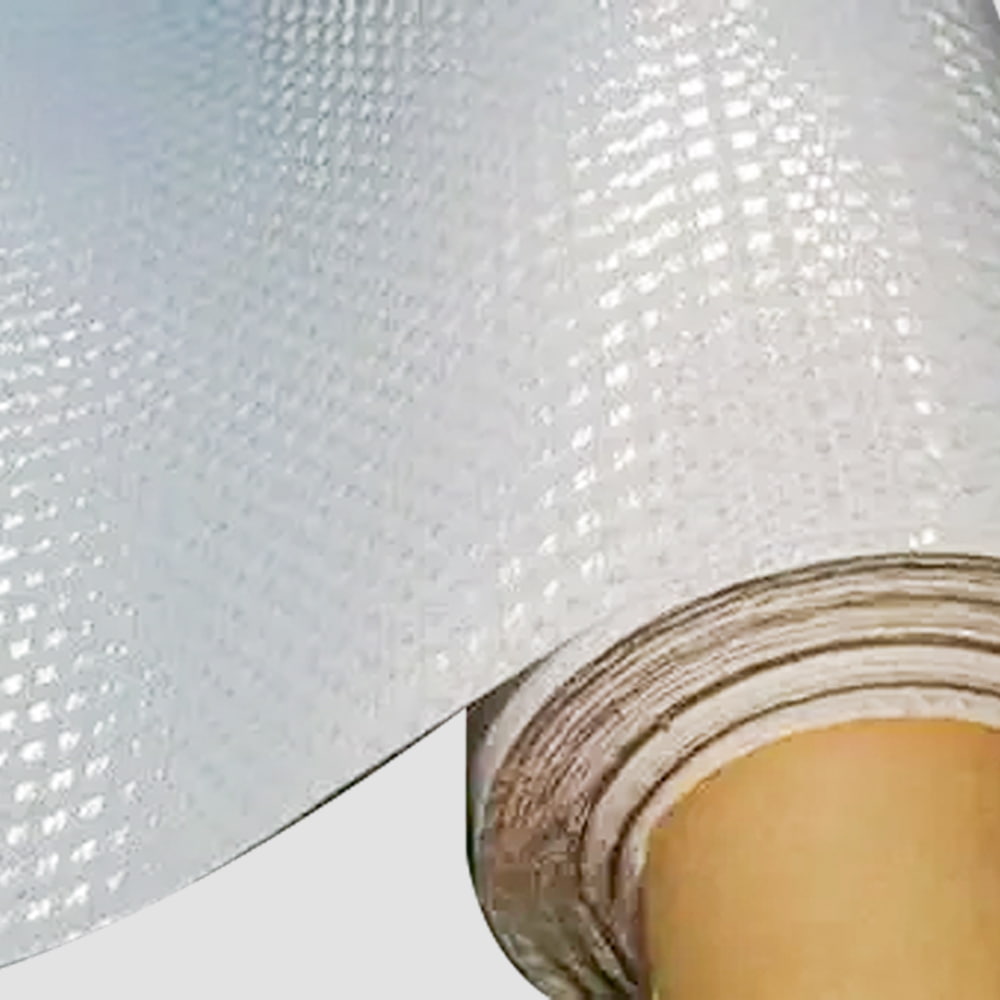 Mesh-Reinforced Polyethylene Vapour Control LayerMesh-reinforced PE vapour control layer for warm-side roof and wall assemblies, with taped laps and low vapour transmission.View Product →
The reinforcement also keeps the sheet dimensionally stable when it is pulled across studs at 600 mm centres, so the lap line stays straight and the tape bonds to a flat surface instead of a rippled one.
Joints and penetrations decide the real air and vapour performance. Use a matching vapour-barrier tape rather than a breather tape, seal service penetrations, and close window junctions with the tape type intended for that side of the wall.
Specifying and Ordering: Four Checks Before You Confirm
Four checks separate a reliable order from a specification that only looks complete.
- Fix the assembly before the membrane. Decide ventilated or unventilated, warm or cold, and run the condensation check to EN ISO 13788 or the applicable local code. The membrane follows from that result; the comparison of waterproofing types used in construction shows how each family behaves in a given position.
- Choose the vapour class, then the mechanical class. Vapour-closed or vapour-open is decided by the assembly; grammage and scrim count are decided by handling, wind uplift at fixings and the number of trades that will walk the sheet.
- Demand test data at the ordered grammage. Ask for EN 12311-1 tensile, EN 12310-1 nail shank tear and EN 1928 watertightness results on the exact product code, together with roll length and width tolerances so the installer can plan laps.
- Verify the paperwork and the factory. A declaration of performance against EN 13859, CE marking and a current factory inspection record are the minimum. Jiangsu Aotelong New Materials Co., Ltd. states that its building membranes carry CE marking and BBA certification and that its plants have been assessed under the ICC-ES and BBA factory inspection programmes; treat those statements as items to confirm against the certificate numbers rather than as given.
Where a woven PE underlay with a non-woven reinforcement face is required for adhesion or site handling, request the identical test set in the same units, so the two options can be compared line by line.
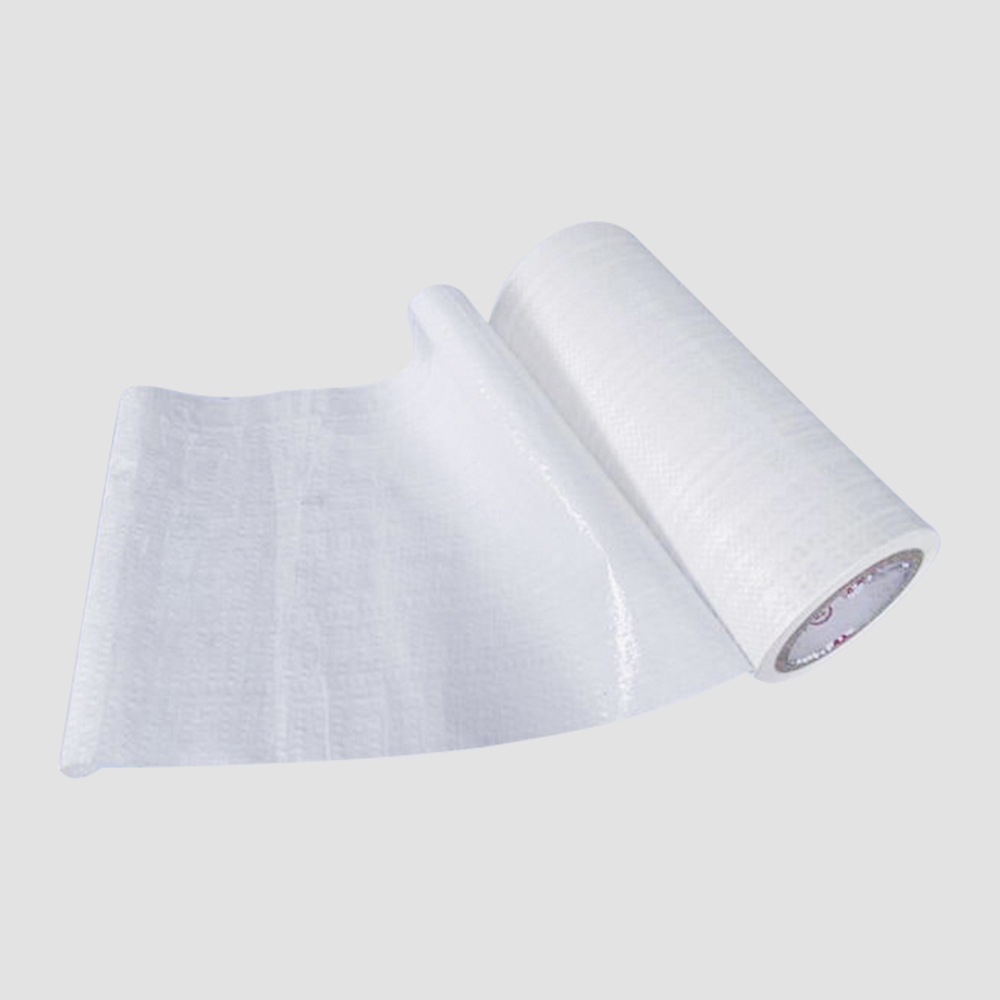 Non-Woven Fabric Reinforced Woven PE UnderlayVapour-closed woven PE underlay with a non-woven reinforcement face, offering tear resistance and an Sd value of about 35 m.View Product →
Questions Buyers Ask Before Ordering
Does mesh reinforcement change how vapour-tight the underlay is?
No. Vapour resistance is set by the polyethylene layer and its thickness and is declared as an Sd value to EN ISO 12572. The scrim sits inside the film and does not open a diffusion path, so a reinforced PE underlay remains vapour-closed and should be specified as such.
Can a mesh reinforced PE underlay be used on a warm roof?
Yes, provided the vapour control layer sits on the warm side of the insulation and the condensation check to EN ISO 13788 passes for the actual climate and indoor humidity. On a warm roof the reinforced sheet is normally the control layer beneath the insulation, not the top layer under the covering.
Which grammage is right for a metal roof?
There is no single answer without the fixing layout and wind load, but handling and fastener loads drive the decision more than water resistance does. Request EN 12310-1 nail shank tear results for 120, 150 and 200 g/m2 versions of the same product, then choose the lightest grade whose tear result stays above the value your fixing spacing requires.
How should laps be sealed on a vapour-closed underlay?
With a matching vapour-barrier tape on a clean, dry surface, at the lap width stated in the installation instructions, and run continuously along the lap rather than patched at overlaps. A breather tape on a closed sheet adds a weak point without adding vapour control.


© 2024 Jiangsu Aotelong New Materials Co., Ltd.

-
+86-0514-87539226 (Tel)
+86-514-87539218 (Fax)
Tiancheng Road, Shatou Industrial Park, Guangling District, Yangzhou City, Jiangsu.